

NEB Festival Virtual Lunchtalk: FROM VOID TO COMMONS!
FROM VOID TO COMMONS
Virtual Lunchtalk at the New European Bauhaus Festival 2026
Recap our Virtual Lunchtalk as part of the New European Bauhaus Festival 2026 with experts from MANIFESTA16 RUHR, TU-Dortmund University, Zollverein Foundation and Rutgers University.
Drawing on the Ruhr metropolis’ tradition of emerging from the void, in this talk we step from the post-industrial heritage into the dynamic neighborhoods, where the need for change remains. We discuss opportunities ans perspectives for the future with an expanded focus on the role of former churches as catalysts for change within the local communities. (The event was recorded on 12th June 2026)
SPEAKERS:
- Hedwig Fijen, Director of MANIFESTA Foundation (Amsterdam, Netherlands)
- Carla Zimmermann, Stiftung Zollverein (Essen, Germany)
- Josep Bohigas, Creative Mediator at MANIFESTA16 RUHR (Barcelona, Spain)
- Prof. Renee Tribble, TU Dortmund University (Dortmund, Germany)
- Prof. Wolfram Hoefer, Rutgers University (New Jersey, USA)
- Moderation by Sebastian Schlecht, lala.ruhr (Ruhrgebiet, Germany)
The lunch talk will explore two distinct aspects of the region which, despite their differences, share a key commonality: both point to spaces of void, which, whilst clearly a shortcoming, can also be seen as a call for revitalisation, reinterpretation and (re-)active use.
A recent catalyst for this discussion is the contribution by Josep Bohigas, who will be presenting his urban vision for Manifesta 16 Ruhr. As an external observer, he has engaged intensively with the former coal and steel region over the past few years. His perspective offers a refreshing view of the Ruhr region, its neighbourhoods and its future development potential. A key insight herein is that transformation becomes particularly urgent where social needs, functional requirements and specific local necessities converge.
The void left by the former industrial sector in the Ruhr region was not merely the disappearance of traditional forms of production. Rather, it left behind a complex legacy of structural challenges, large-scale environmental pressures and social uncertainty. At the same time, these upheavals gave rise to new opportunities for action, specific here the UNESCO World Heritage Zollverein, which continue to shape the Ruhr region to this day as a laboratory of change.
In this event, we link the issue of the ‘underground’ void of industrial leftovers to another challenge of transformation: dealing with a wide range of obsolete churches, particularly parish and church buildings. Changes in religious practice mean that existing buildings are losing their original function, making it necessary to develop new concepts for their use and new ways of interpreting their significance.
These processes are characterised by complex feelings of farewell, uncertainty, hope and reorientation. At the same time, they make it clear that spaces for community are still needed – even where community is no longer organised primarily along religious lines.
Against this backdrop, this contribution discusses how empty spaces can be interpreted fruitfully and transformed into sustainable forms of community, and how neighbourhoods can develop in line with their needs when old structures are dismantled and new ones emerge only gradually and, in most cases, through innovative processes.
In tension between industrial sites that have now been designated UNESCO World Heritage Sites, regional history, the pressing need for action, and the needs of local neighbourhoods and their communities, this discussion explores how the region can continue to develop in the future – and how existing vacant spaces can be transformed into opportunities and new social, spatial and cultural potential.
Futher links:

Join our Virtual Lunchtalk within the The Festival of the New European Bauhaus 2026!

First Innovation Lab with Urban Experience Ruhr
First Innovation Lab with Urban Experience Ruhr!
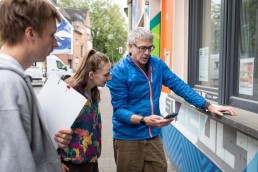
On the 4th of May, we met up for a special playtesting with our project partners the Urbanisten, Bande der Gestaltung and selected experts at the c/o Raum in Gelsenkirchen-Ückendorf. Here, we tested and discussed our “green” analog game-prototype for Urban Experience Ruhr for the first time.
During a 60-minute stroll through the neighborhood, particpants completed various tasks that invited them to explore the Ückendorf district and in Gelsenkirchen through the lens of urban greenery. The invited experts were Nora Scholpp from Klima.Werk, Matthias Krentzek of mxr storytellling and Daniel Parlow from the Urbanisten. Afterwards, we gathered to reflect on the gameplay and discuss a central question: How can the experience be translated into the digital realm?
The particpants’ feedback was valuable and provided us with important impulses for future development. For further information, please refer to the new project website: https://urbanexperience.ruhr/
We are looking forward to the next round!


first playtesting with our project partners and experts in gelsenkirchen (c) Jannis Reichard

Recap: Warmup with Manifesta 16 Ruhr
Recap: Warmup with Manifesta 16 Ruhr
Our series of workshops came to a close in February with the St. Josef Upcycling and Creative Market, where everyone could enjoy the outcome of the collaboration with the local community that had been underway since October 2025.
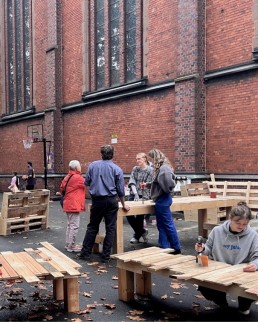
With the launch of the Manifesta 16 Ruhr Warmup program, we have worked together with local residents and dedicated volunteers to temporary redesign the area in and around the former St. Josef Church in Gelsenkirchen-Ückendorf. In monthly upcycling workshops, we first collected materials such as discarded pallets, old wood, and slatted frames, which we then transformed together into tables, benches, soccer goals, and ping-pong tables. The Ückendorf-based initiative BallerZ joined the programm with a temporary basketball court, inviting people to play together every week.
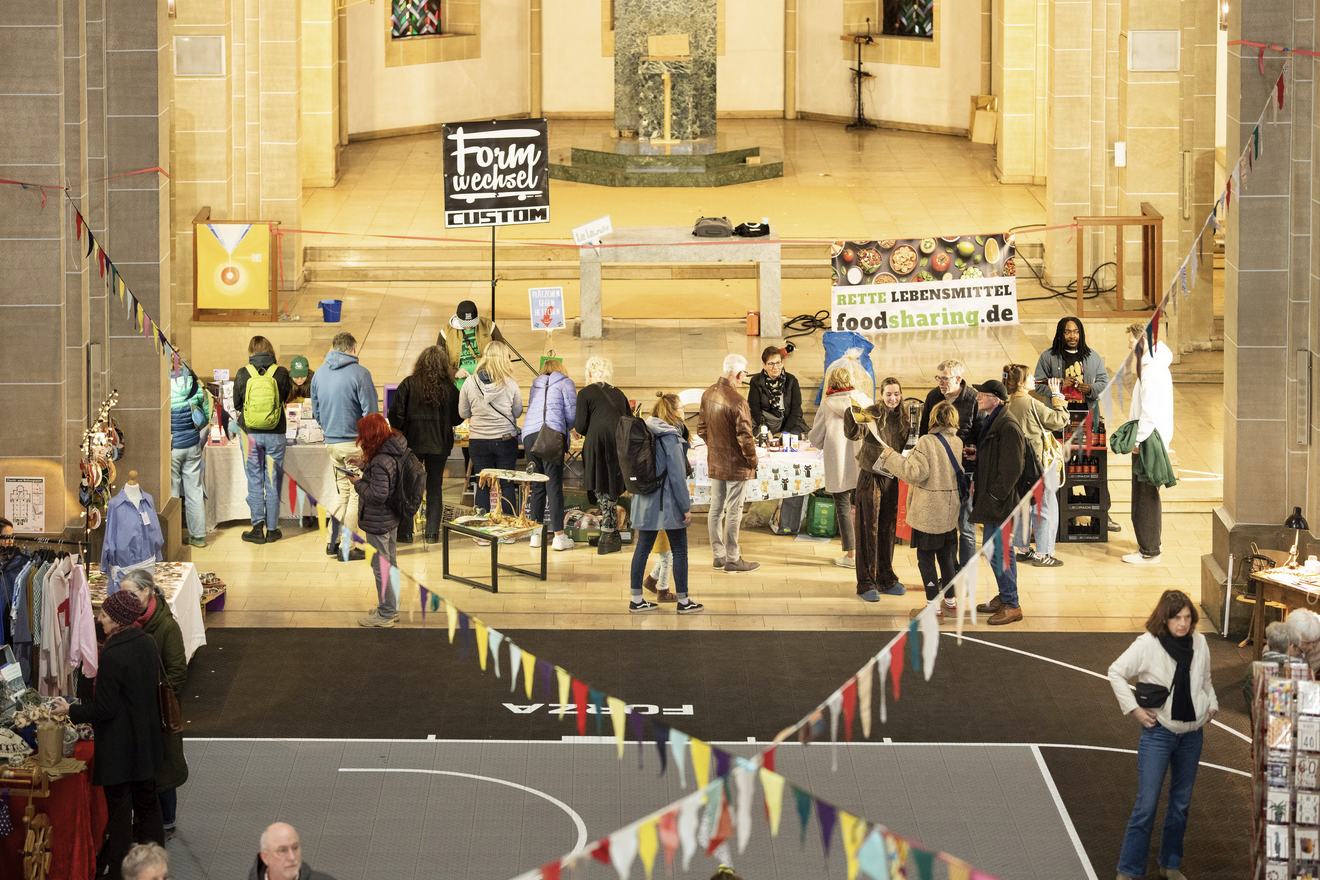


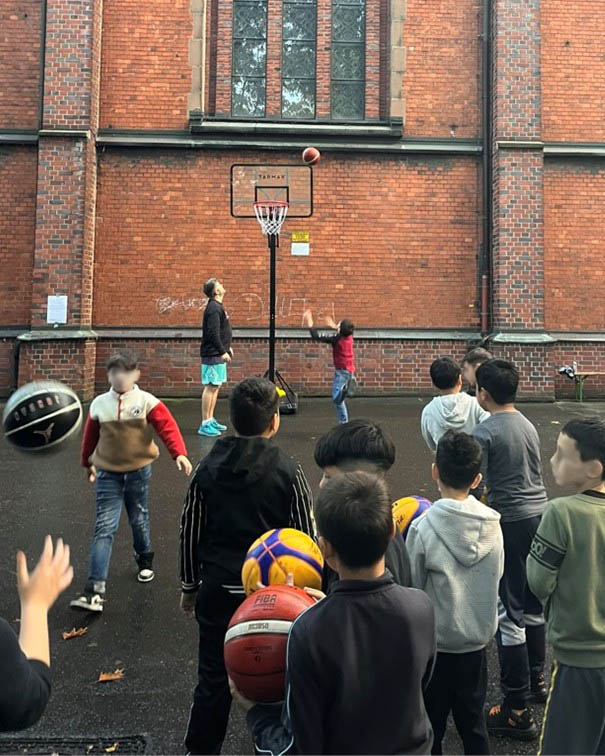
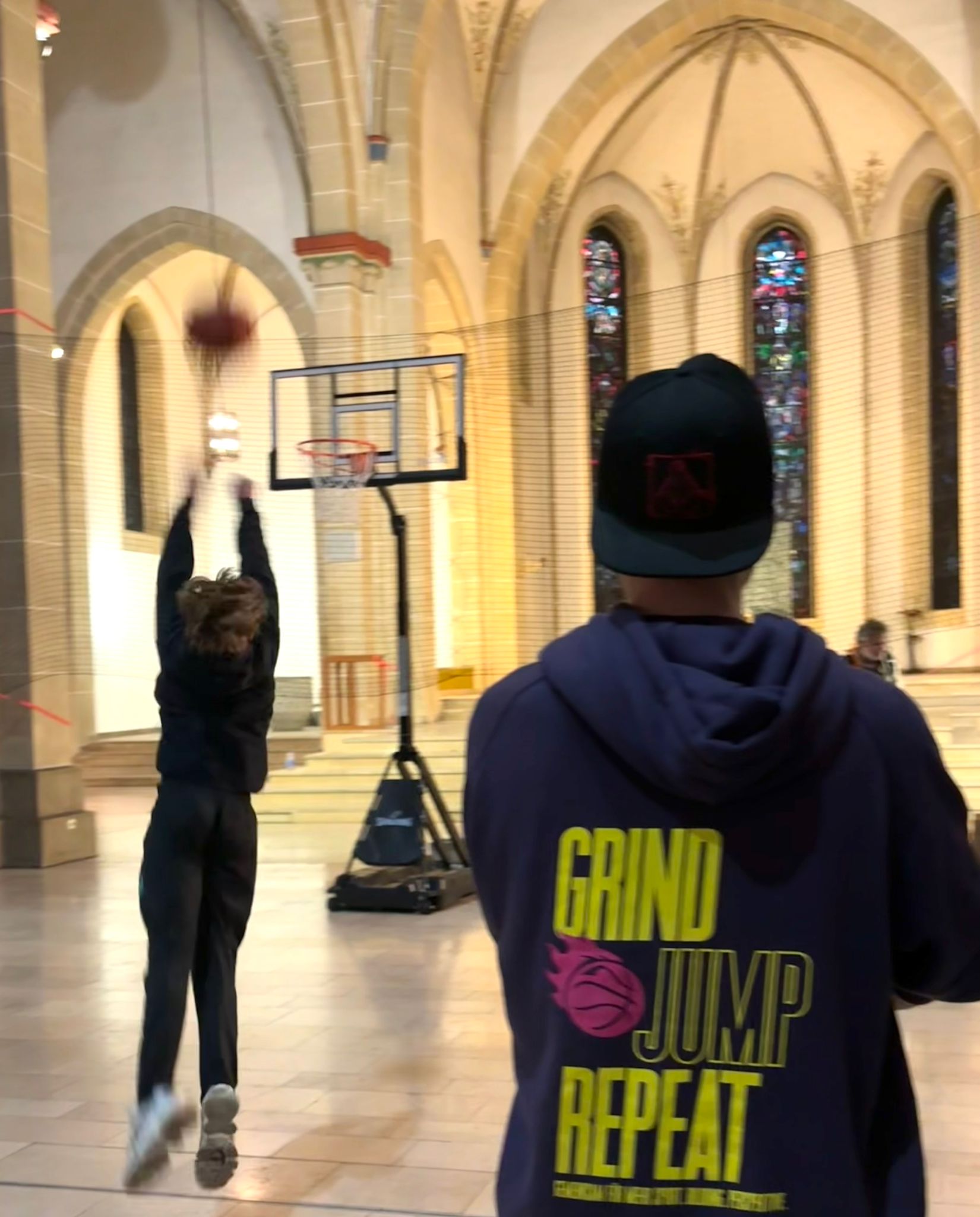


With the Kreativmarkt on February 28, 2026, our collaboration with Manifesta Ruhr comes to an end. A wonderful conclusion to our program! (c) Johannes Zell
In our monthly upcycling workshops, creations made from recycled materials were built by people from the neighborhood. Our goal: to develop the space as a genuine gathering place for Ückendorf, not as a pre-designed space imposed from the outside, but as something created with and by the neighborhood.
The event concluded with the Kreativmarkt, when we transformed the church into a lively marketplace for handmade one-of-a-kind items, design, jewelry, upcycling, and visual art from across the Ruhr region. In addition to the diverse artists, Foodsharing Gelsenkirchen and the local animal welfare association (Tierschutzverein) also participated, enriching the day with rescued food and waffles.
The event series was part of the warm-up program for Manifesta 16 Ruhr, the European nomadic biennial taking place in the Ruhr region from June 21 to October 4, 2026. We are very much looking forward to the summer and to seeing what becomes of this space.
Many thanks to all the participants, creatives, and visitors who made these past few months possible!
Find out more about Manifesta 16 RUHR!
SHARE US
Recap of the Urban Experience Ruhr Kick-Off
recap of our kick-off with URBAN EXPERIENCE RUHR street-art bingo & things to know
On the 29th of January we launched Urban Experience Ruhr! Together with our partners and other curious minds from the fields of urban development, culture and civil society, we celebrated the launch of our new project with the Urbanisten and Bande der Gestaltung .
To start things off, we got active with the participants during a round of Street Art Bingo through Dortmund’s Union district. Afterward, a welcome session and presentations by various speakers took place in the Werkhalle in Dortmund.
Vera Herberholt introduced #stadtsache: an app that invites citizens to explore and experience their city through themes like “Greenery”, “Poetry” and “Technology”.
Daniel Parlow from the Urbanisten spoke about the potential of Urban Games to turn the city into a playing field and his experience with developing games in urban spaces.
Gabi Linde of #HiddenCampus gave an insight into her work with participatory formats for urban design and social interactions in public spaces.
Thank you to all speakers and participants for a successful launch! The Kick-Off provided space for conversations, first ideas and an outlook for the coming two years. Urban Experience Ruhr will soon continue with new formats, such as Innovation Labs.
Urban Experience Ruhr is funded within the framework of the NEXT.IN.NRW innovation competition, with support from the European Regional Development Fund (ERDF).

kick-off urban experience ruhr with our project partners the urbanisten & bande der gestaltung in dortmund (c) Jannis Reichard
urban experience ruhr - exploring the ruhr area through urban games!
urban experience ruhr - exploring the ruhr area through urban games!
We’re back from our winter break and kicking off the year with a new project: Urban Experience Ruhr!
lala.ruhr is working with its partners, Urbanisten and Bande für Gestaltung, to develop new forms of participation and urban research in the Ruhr region. The focus is on Urban Games: games for public spaces that invite people to perceive the city differently and shape it together. Digital elements meet real-world locations, and movement and play intersect with urban development.
Our focus is particularly on ecological issues surrounding the “Green City” and how knowledge about the environment and urban nature can be conveyed in a playful way. Players move through a real neighborhood and explore it using designated game areas and points of interest. At these locations, they solve tasks and answer questions to earn points. The games are developed and adapted as prototypes, with the goal of using them long-term as tools for citizen participation and research.
On January 29, Urban Experience Ruhr kicked off! Together with our partners and curious minds from urban development, culture, and civil society, we celebrated the launch of our new project with the Urbanisten and Bande der Gestaltung.
To kick things off, we got active with the participants during a round of Street Art Bingo through the Unionviertel in Dortmund. This was followed by a welcome reception and presentations by various speakers in the Werkhalle.
Vera Herberholt introduced #stadtsache – an app that invites citizens to explore and experience their city through themes such as “Greenery,” “Poetry,” or “Technology.”
Daniel Parlow from Urbanisten spoke about the potential of urban games to turn the city into a playground and shared his experience with developing games in urban spaces.
Gabi Linde from #HiddenCampus provided insight into her work with participatory formats for urban design and social interaction in public spaces.
Thank you to all speakers and participants for a successful start! The kick-off provided space for discussions, initial ideas, and an open outlook on the coming two years. Urban Experience Ruhr will soon continue with new formats such as Innovation Labs.
Urban Experience Ruhr is funded as part of the NEXT.IN.NRW innovation competition with funds from the European Regional Development Fund (ERDF).
urban experience ruhr – location based urban gaming

Closing #UPSTJOSEF: Upcycling and Kreativmarkt with MANIFESTA 16 RUHR
upcycling and kreativmarkt with MANIFESTA RUHR
Closing #UPSTJOSEF: Upcycling- and Kreativmarkt on February 28!
On February 28 from 12 pm to 18 pm, lala.ruhr and Manifesta 16 Ruhr will transform the former St. Josef church in Gelsenkirchen into a lively market place! This is a great opportunity to experience how vacant church spaces can be revitalized as open meeting places through art and community projects! Against the impressive backdrop of the nave, you’ll find handmade one-of-a-kind items, jewelry, upcycled goods, and visual art by artists from across the Ruhr region.
The event marks the conclusion of our #UPSTJOSEF workshop series and is part of the Manifesta 16 Ruhr warm-up program. The main program of Manifesta 16 Ruhr will take place from June 21 to October 4, 2026, in several cities across the Ruhr region, transforming vacant churches into spaces for art and new perspectives.
Click here for more information on the Manifesta 16 Ruhr warm-up program.

#UPSTJOSEF No5: manifesta & lala.ruhr are looking for creatives from the ruhr area!
#UPSTJOSEF - An upgrade through community
#UPSTJOSEF - An upgrade through community
The warm-up program for the international art biennial Manifesta 16 Ruhr, taking place in and around the former St. Josef Church in Gelsenkirchen-Ückendorf, has begun!
In close collaboration with Manifesta, we are launching our monthly workshop series #UPSTJOSEF. The square next to the St. Josef Church is being gradually transformed with the help of local residents and anyone interested. Benches, tables, color schemes, play areas, raised garden beds, and much more will be planned and built together using recycled materials. An upcycling upgrade through community!
The Ückendorf-based initiative Social BallerZ has also transformed the square and the interior of the former church into a temporary basketball court. The Gelsenkirchen-based project promotes team spirit, inclusion, and the joy of movement through the shared love of basketball.
The square and the church interior are thus becoming a place for new neighborhood collaboration. With #UPSTJOSEF, a revitalized space is emerging: the vacant building is being transformed into a place for collaborative creation, physical activity, and dialogue.
Thank you to everyone who joined us and made the kickoff so lively! The next event is on December 12, 2025. Sign up at up-st-josef@lala.ruhr! Come by and join in! Participation is free.
The Manifesta Biennial is an international art biennial that will bring art, urban space, and residents together next year with an extensive program centered around eleven other former churches in the Ruhr region.
Photos: Johannes Zell, Sebastian Schlecht, BallerZ


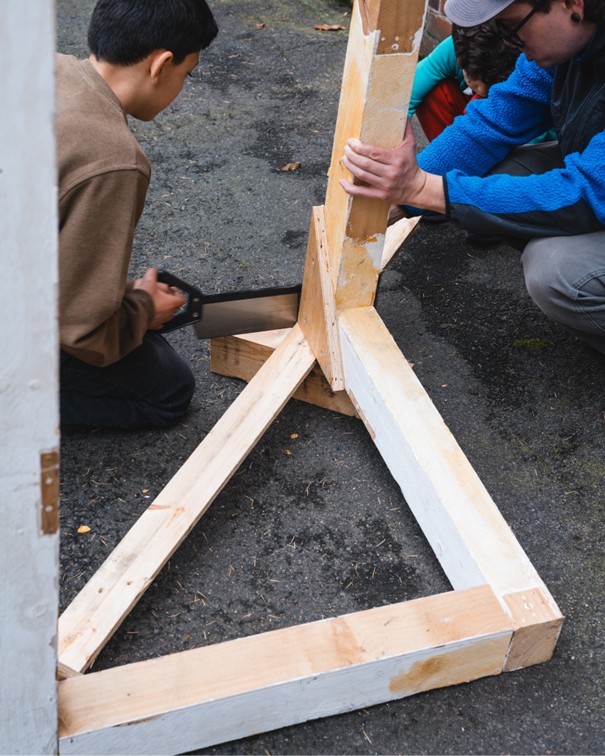

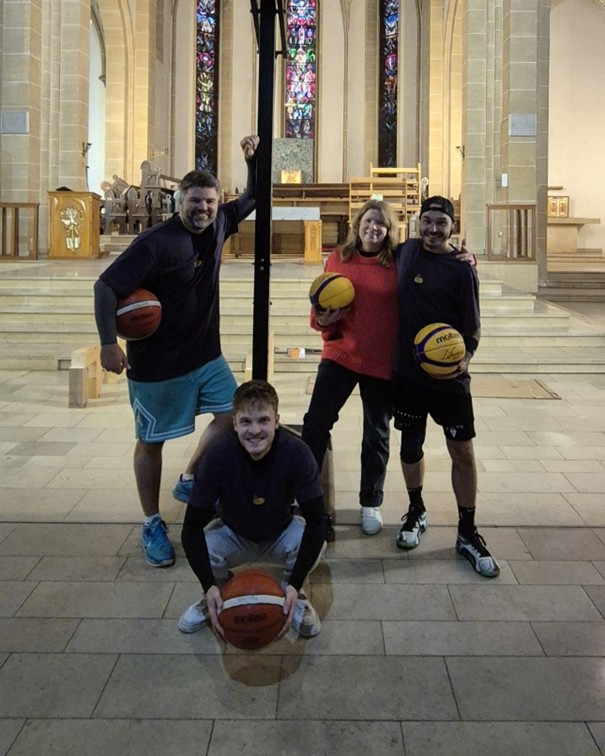
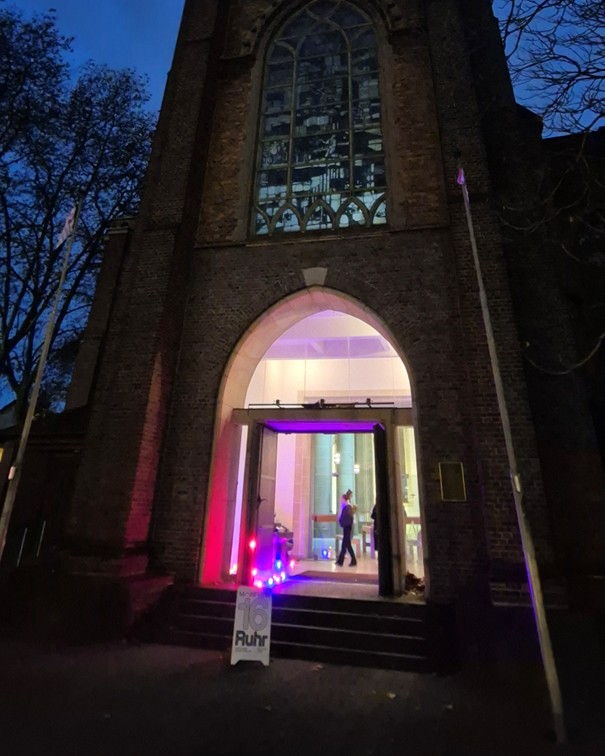
#UPSTJOSEF – An upgrade through community at the former St. Josef church in Ückendorf as part of the MANIFESTA 16 RUHR warm-up program

lala.ruhr was at the WERK.STADT!
lala.ruhr was at the WERK.STADT of the Polis Convention
Lala.ruhr was at the WERK.STADT! The idea that design and architecture can contribute to something good drives many creative people. Yet negative impacts are often only partially recognized or taken into account. How can a consistently positive and honest urban perspective emerge? lala.ruhr explored this question in collaboration with the research group UrbanDesignUnit at TU Dortmund University and Dutch architect Vincent van der Meulen. Building on the concept of “Building with a positive footprint,” we set out with POLIS WERK.STADT to create a city fit for the future. Will you join us in shaping a positive future?!
Date: 8. Mai 2025
Location: Polis Convention Düsseldorf
Link: https://www.polis-convention.com
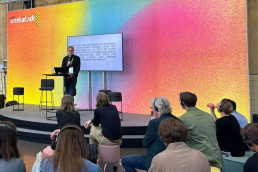
POSITIVE CITIES – a consistently honest urban perspective!

Reclaiming Hope!
Reclaiming Hope!
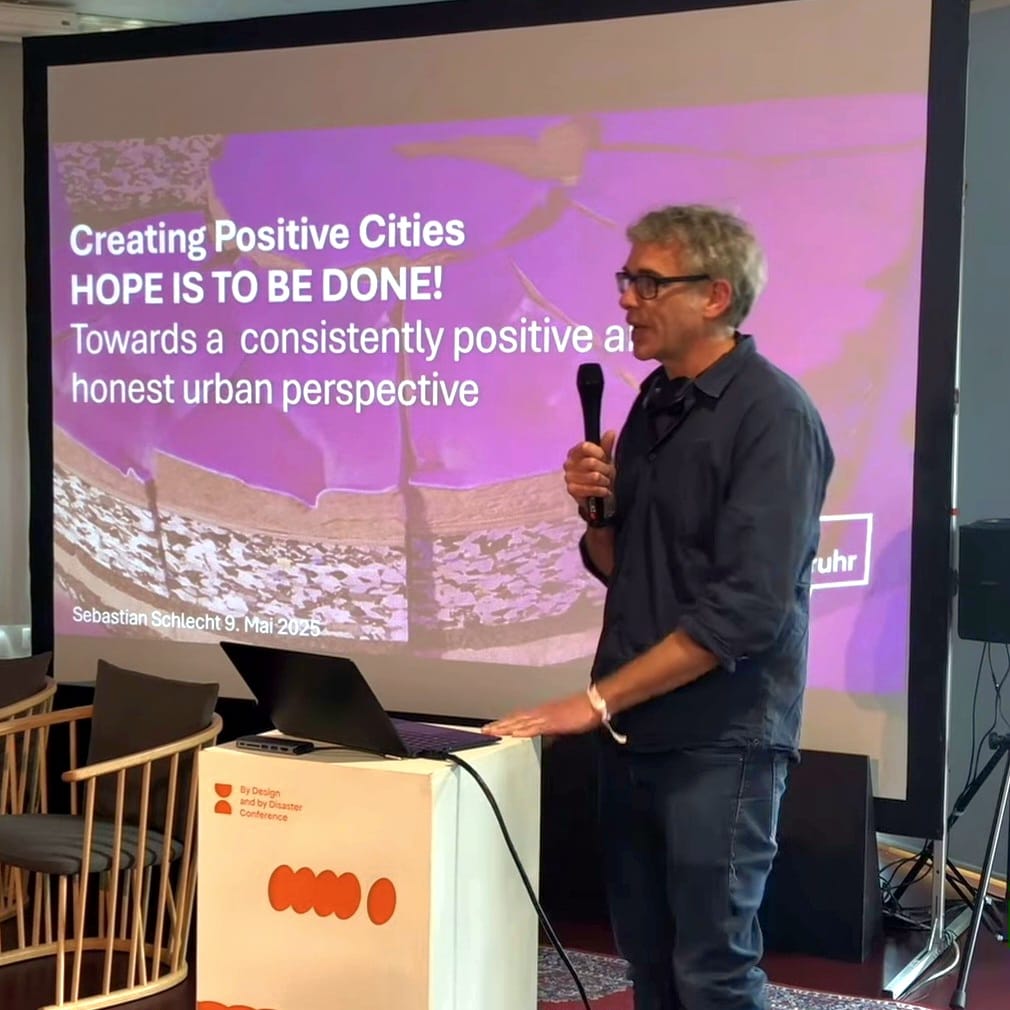
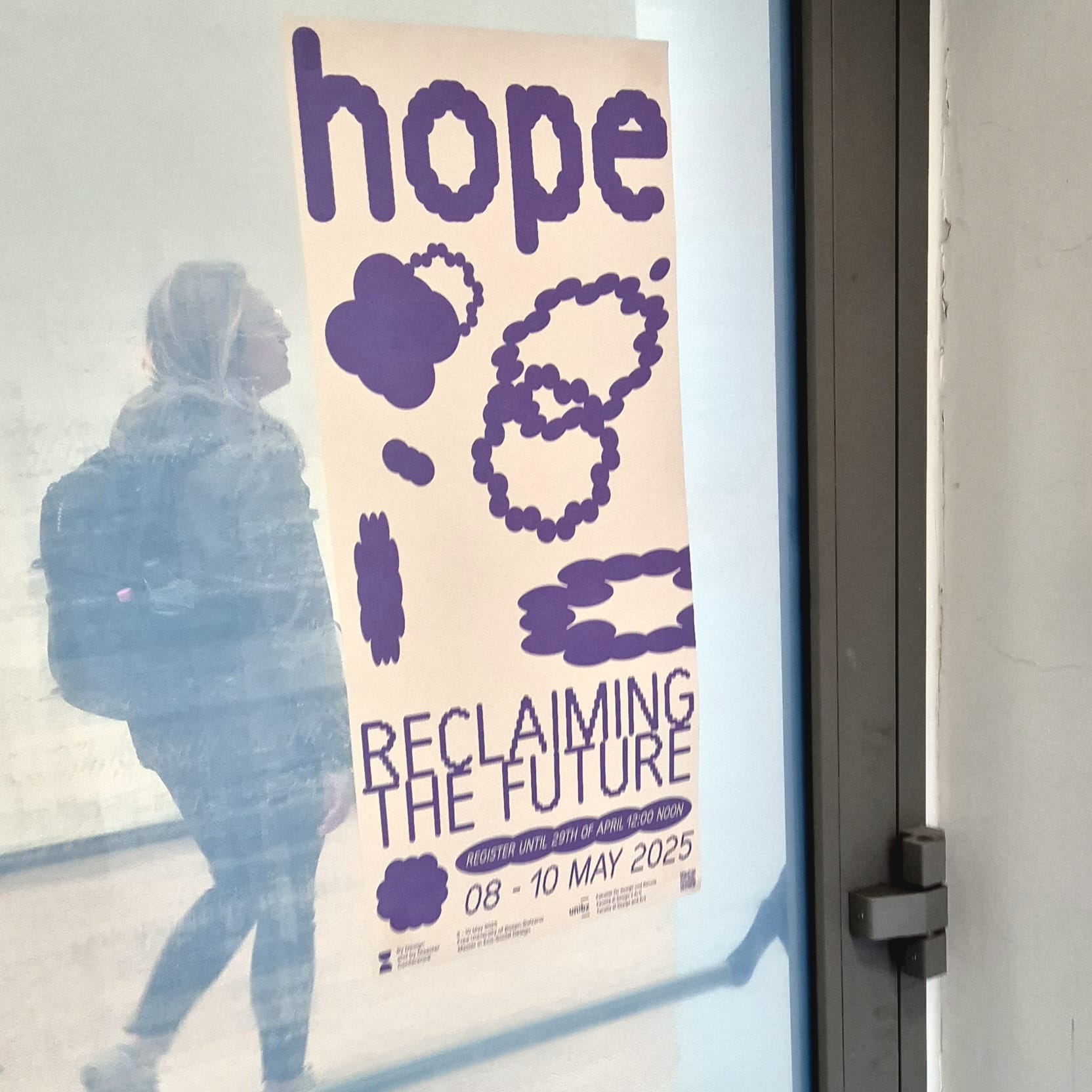
As part of the “By Design and by Disaster” conference at the Faculty of Design and Arts at the University of Bozen-Bolzano, the session titled “Hope – Reclaiming the Future” explored the principle of hope from a variety of perspectives. It’s wonderful that our call to action from the Positive Cities project couldn’t have been more fitting: We must create hope! To this end, Sebastian Schlecht was able to once again present the concept of positive cities and the constructive definition of hope. Following the kickoff at the Rotterdam International Architecture Biennale “Nature of Hope,” this was a fitting conclusion – no, it remains a new beginning! Thank you to Bolzano for this wonderful exchange.
Date: May 9, 2025
Location: Free University of Bozen-Bolzano
Link: https://designdisaster.unibz.it/2025/




Alienated and Entangled Ruhrgebiet
alienated and entangled ruhr area
A public lecture by Sebastian Schlecht as part of the CLL – Copenhagen Landscape Lecture Series. This lecture series is organized by the Department of Landscape Architecture and Planning – Design in collaboration with the Goethe-Institut Denmark.
The presentation examined the transformation of the landscape of the Ruhr metropolitan region from the perspective of lala.ruhr’s work. How this region transformed from a landscape of natural tranquility into a land of untamed fires. How the hooves of wild horses were replaced by the magnetism of profit. The forces of industrial creation have irrevocably transformed the area, from the depths of the coal mines to the sky. After the last decades of repair, renaturation, and redesign – driven by both desperation and love – fractures and unanswered questions remain. The need to create a livable region for over 5 million people is a constant driver of creativity in design, culture, and technology, simultaneously nurturing and neglecting the landscape – the region’s foundation.
Date: May 19, 2025
Location: University of Copenhagen, Department of Geosciences and Natural Resource Management
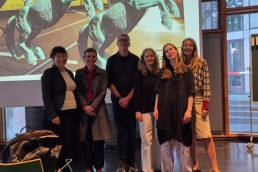
alienated and entangled ruhr area – a lecture on lala.ruhr as part of CLL – Copenhagen Landscape Lecture Series

Opportunities for a Just Urban Landscape - Feminist. Caring. Resistant.
Opportunities for a Just Urban Landscape - Feminist. Caring. Resistant.
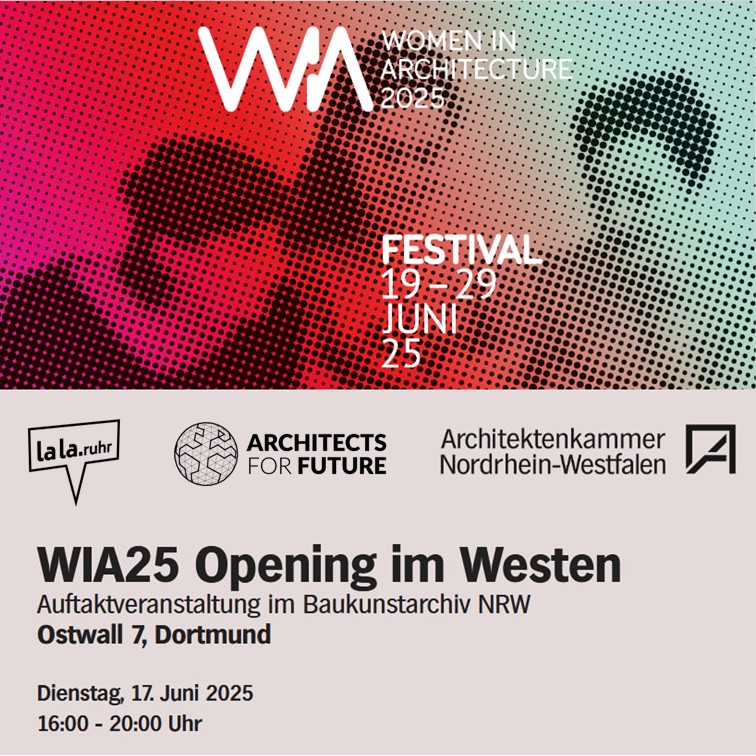
As a partner of AKNW, lala.ruhr was invited to contribute a statement to the NRW opening of the WIA Women In Architecture Festival 2025. Together with the Ruhr chapter of Architects for Future, we drafted the statement: Opportunities for a Just Urban Landscape – Feminist. Caring. Resilient!
Cities need spaces that bring people together and sustainable structures that strengthen the climate, justice, and community. We must design our cities to be more feminist and caring, while harnessing and preserving resilience!
As part of the opening of the WIA by the Ruhr Chapter, Sebastian Schlecht, founder of lala.ruhr, spoke alongside Janine Boscheinen and Yannis Kulosa from “Architects for Future” about gender discrimination in planning and construction. “When men plan spaces, they work from their own perspective.” A just city must be conceived more from a female perspective. “Compassion and care work must not be exclusively associated with women, even in urban planning and architecture.”
Date: June 17, 2025
Location: Baukunstarchiv NRW in Dortmund
Link: https://wia-festival.de/event/wia25-opening-im-westen/



TT3.0 - Transformation Talks for Mindshift Ruhr
TT3.0 - Transformation Talks for Mindshift Ruhr
Mindshift Ruhr – How can we shape the green transition of the Ruhr region together and in a fair manner? – On September 5, 2025, the third Transformation Talks (TT 3.0) took place at the Makroscope sociocultural center in Mülheim an der Ruhr. The event is organized by the graduate network of the Kompetenzfelds Metropolenforschung (KoMet) at the University Alliance Ruhr and the Young Researchers Forum of the Academy for Territorial Development (ARL) in the Leibniz Association. For the first time it was held in cooperation with the Regional Association of the Ruhr (RVR) and lala.ruhr, with additional financial support from NRW.Bank. Around 50 early-career researchers, young practitioners from the fields of planning and urban development, as well as committed individuals from the fields of culture, education, civil society, and local politics attended the event.
You can find the full report in the next issue of RaumPlanung!
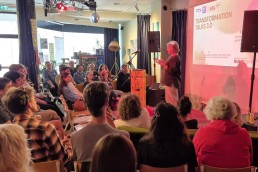
TT3.0 – Transition Talks 2025 in Mühlheim an der Ruhr

ON THE REDISCOVERY OF THE RUHR REGION
ON THE REDISCOVERY OF THE RUHR REGION
We are proud to be able to contribute to the M-US-T Master’s program in Temporary Uses at the Politecnico di Milano!
How can temporary uses be integrated into the planning and transformation process, and what impact can they have? How do we view the timeframes of projects once conceived as permanent when looking back? With regard to the Ruhr region, the current engagement with the consequences of past industrial transformation as a never-ending task, serves as a benchmark that casts the question of interim use in a different light.
Drawing on the history of industry, landscape, culture, and planning, as well as the development of the RUHR and EMSCHER rivers, we discussed current ecological fragilities and the question of temporality in relation to the Anthropocene and the associated urbanization efforts. The way in which the Ruhr region has approached the task of shaping a living environment particularly since the decline of industry, and especially since the IBA Emscherpark, serves as a model in terms of projects and successes as well as processes and methods.
But even after several decades of investment in green spaces and infrastructure, the destruction that extends deep into the ground cannot be undone. The region remains a work in progress and a space for shaping the future of five million residents. The concept of understanding the region as a landscape, as Karl Ganser described it as the most important infrastructure, is and remains particularly groundbreaking today. A landscape that, under the difficult conditions of destroyed geological structures, must offer the residents of the Ruhr Metropolis a livable and ecologically high-quality home.
And even today, this is a challenge that especially in the context of climate change, requires courage, ideas, and innovation. Simply continuing as before is not an option. That is what lala.ruhr stands for. It is a laboratory for the future of a region, a laboratory for landscape and architecture, and for 5 million people. Because: The future can only be built together.
Thank you to Isabella Inti, Prof. Antonella Bruzese, Politecnico di Milano, and Sebastian Schlecht for lala.ruhr.


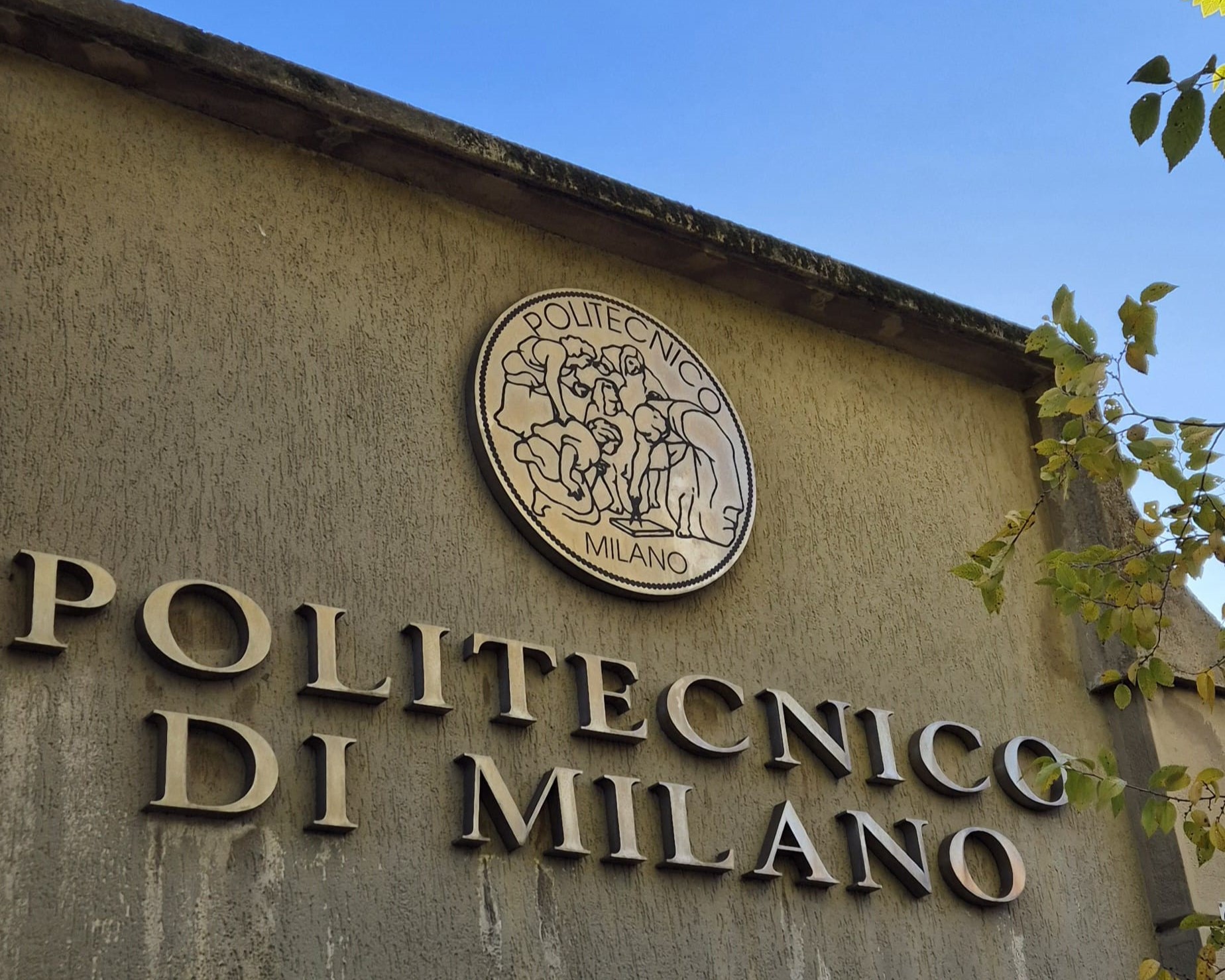

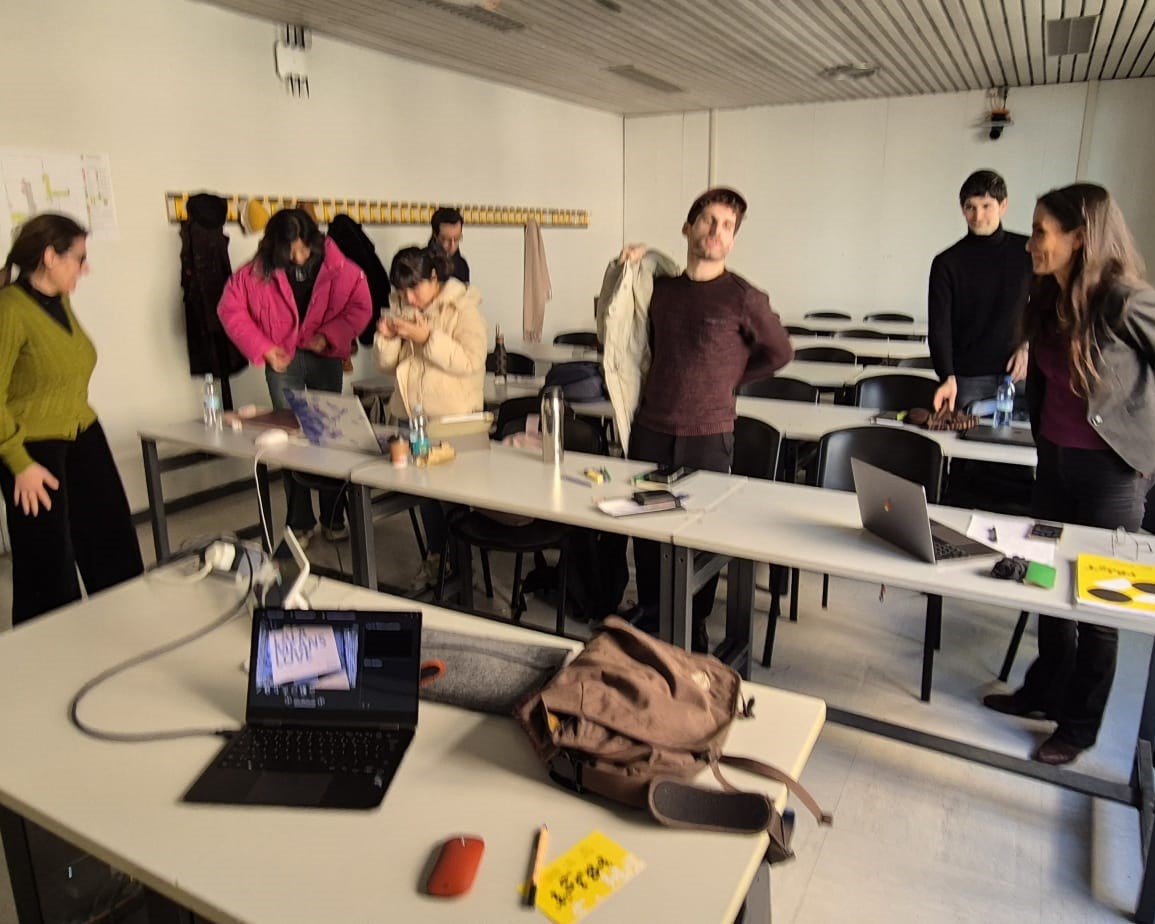

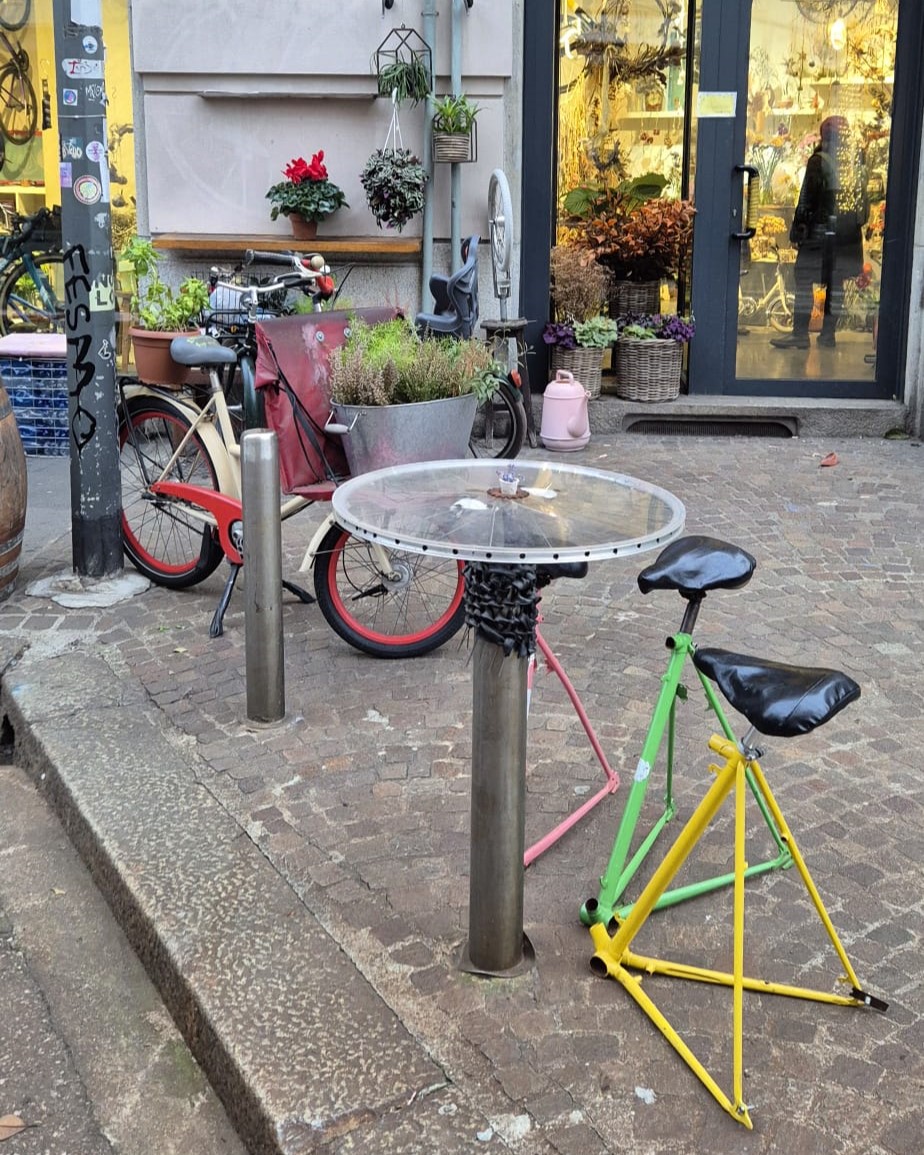
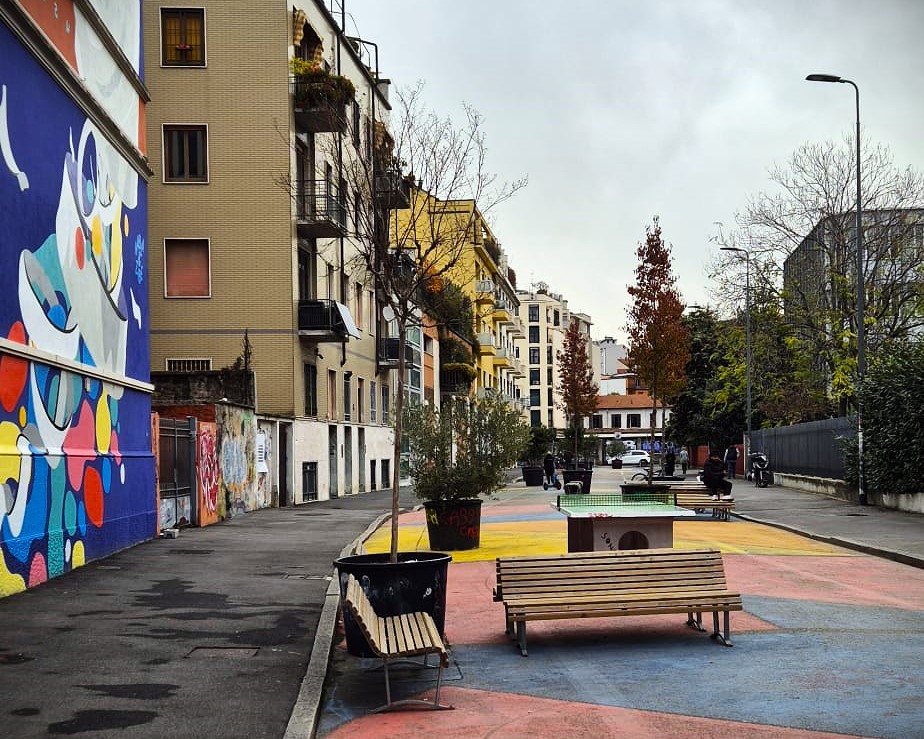
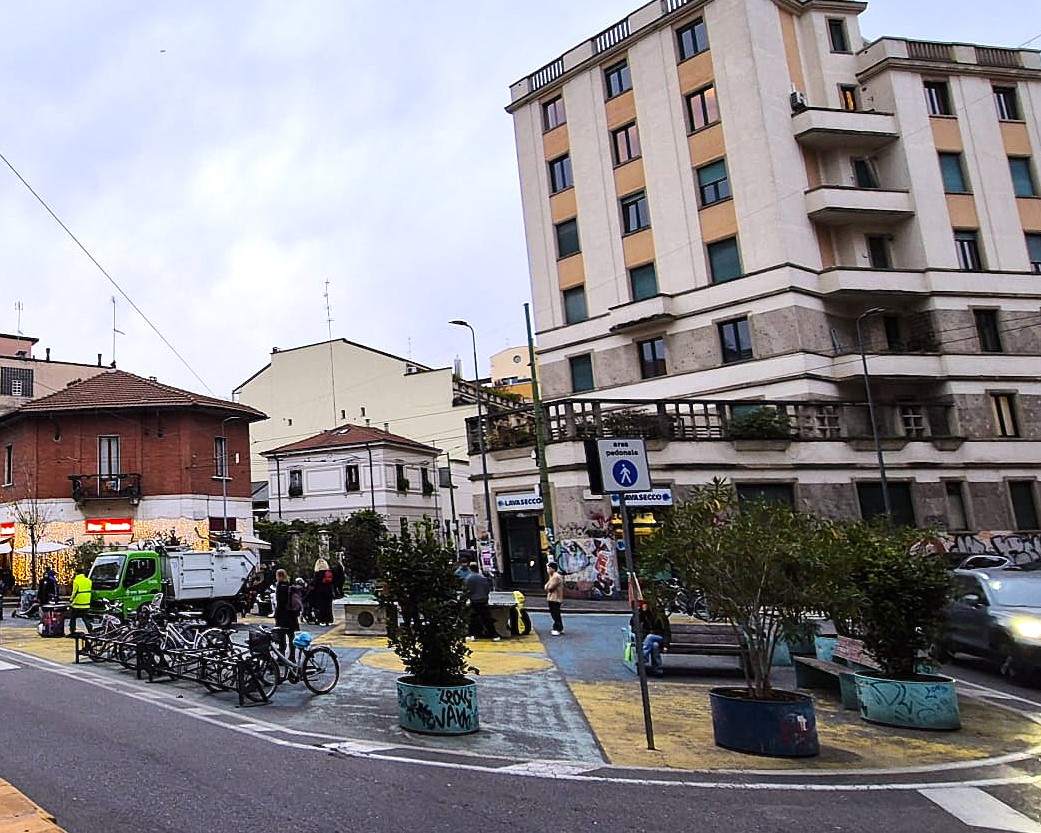


lala.ruhr was invited to contribute to the M-US-T study program in Milan.

CREATING POSITIVE CITIES - hope is to be done! lala.ruhr at the IABR Rotterdam
CREATING POSITIVE CITIES - hope is to be done! lala.ruhr at the IABR Rotterdam
Together with the SBP (UrbanDesignUnit) research group at TU Dortmund University, we have designed our own program for the 2024 International Architecture Biennale Rotterdam (IABR) titled “NATURE OF HOPE“!
We asked: How does hope for a bright future arise and what role do construction and architecture play in this? Armed with insights from the exhibition and a wealth of impressions from the urban area where we visited the Biennale’s “Botanical Monuments,” we set out on our journey. Together with Vincent van der Meulen of Kraaijvanger Architects, author of the concept “Building with a positive footprint,” we explored the idea of how cities can be designed positively, and above all, how we can avoid negative impacts.
We discussed our findings there on October 13 at the conclusion of the Biennale and left them in the exhibition in the form of postcard statements for visitors on the final day.
Over the course of the 2024/2025 winter semester, we will discuss and develop new approaches with the students for thoroughly hopeful and positive urban design concepts for a Bochum neighborhood. And we will also dive into the virtual XR world to visualize Bochum’s future there – stay tuned!

Creating Positive Cities – Hope is to be done! lala.ruhr’s program for the IABR International Architecture Biennial Rotterdam 2024 (c) Jose Londono
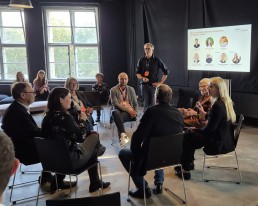
URBAN LANDSCAPES - regenerative, sustainable and diverse
URBAN LANDSCAPES - regenerative, sustainable and diverse
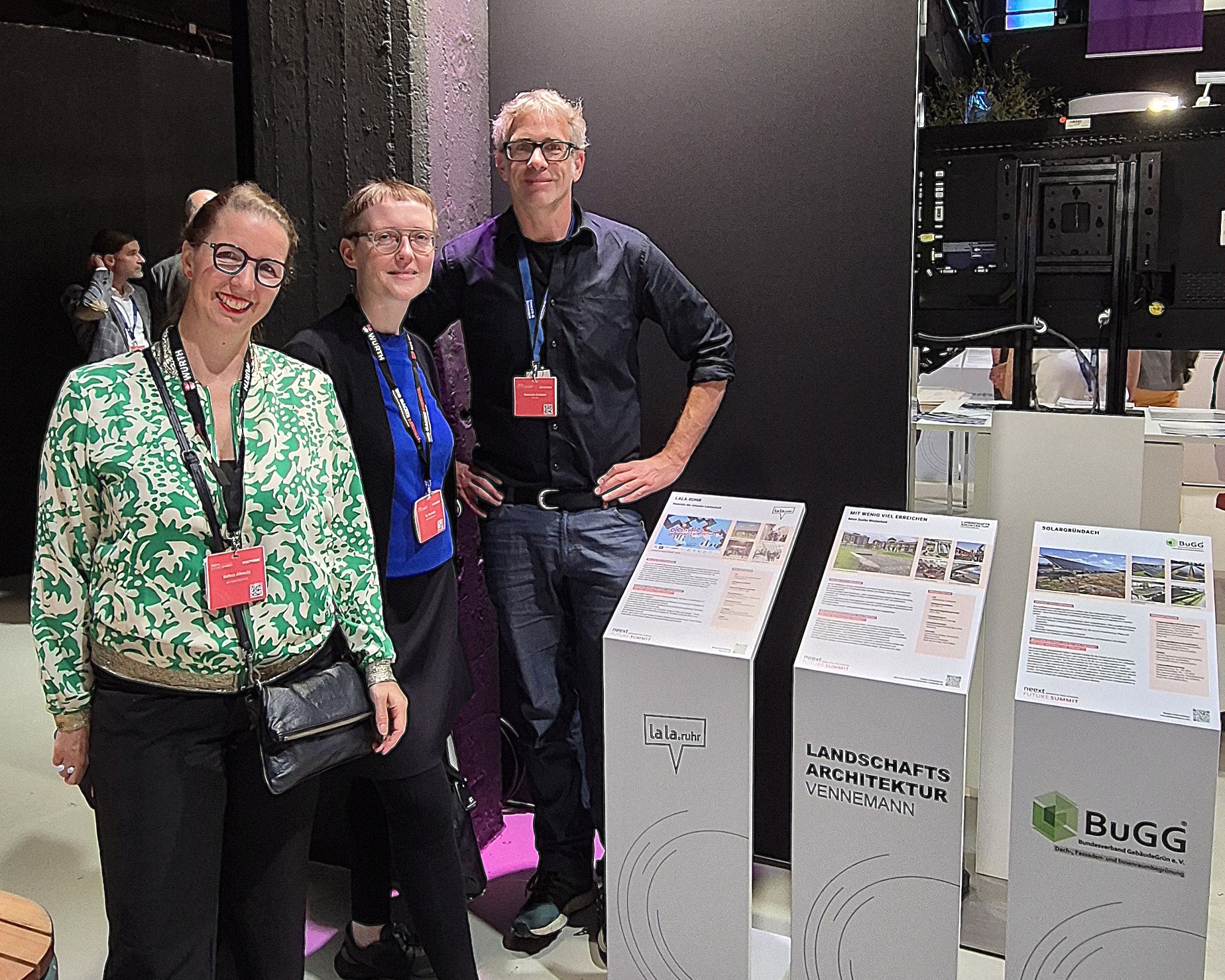
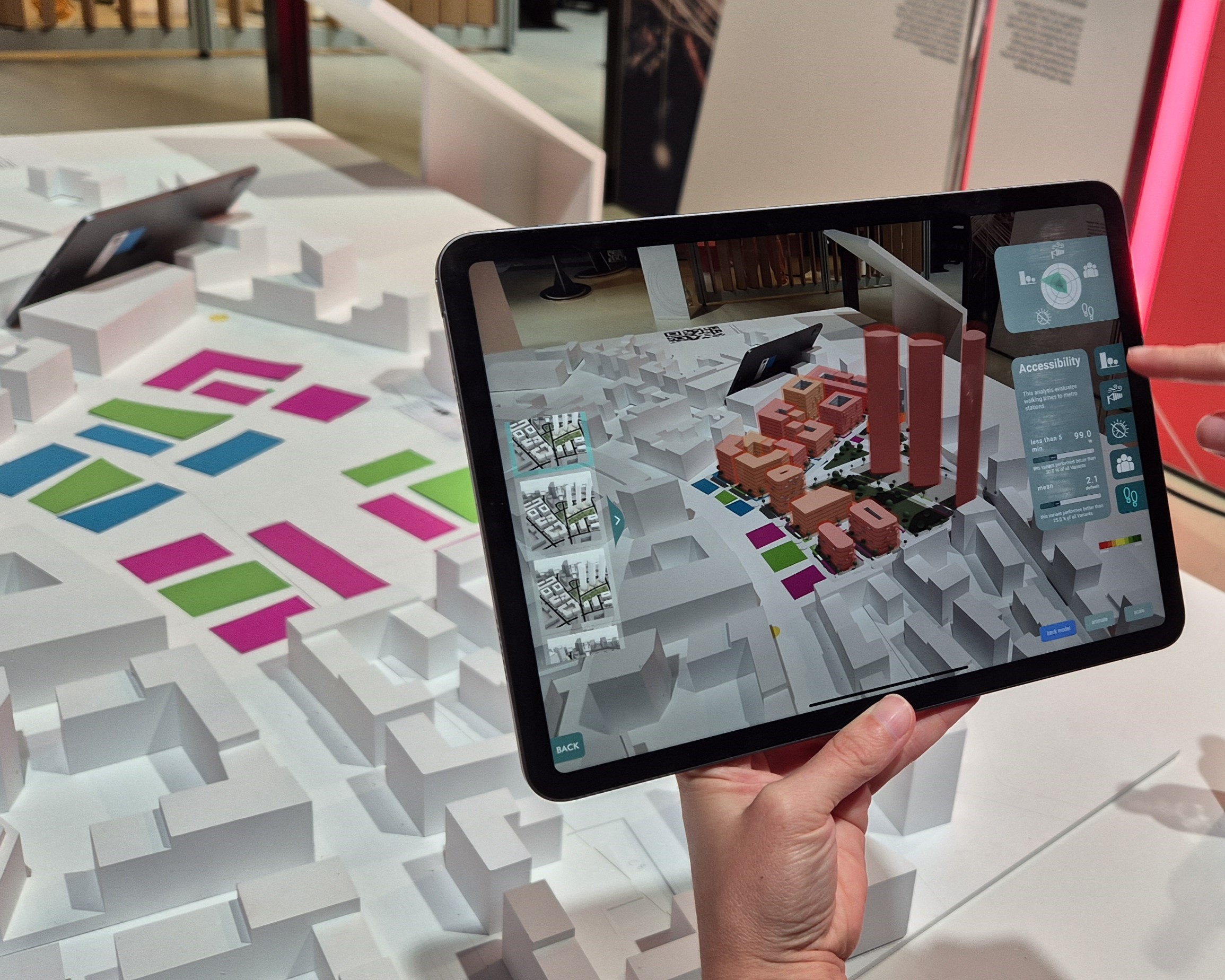
Shaping the Future: lala.ruhr was invited to the international neext Future Summit 2024 to discuss forward-looking solutions for the urban landscape and explore new avenues for collaboration. The fishbowl session we organized focused on the theme: Regenerative, Sustainable, Diverse – Circular Urban Landscapes!
With: Andrea Gebhard (Bundesarchitektenkammer), Annette Nothnagel (LAGA GmbH), Rebecca Landwehr (Bundesverband GebäudeGrün e.V. (BuGG), Wulf Kramer (City Decks Livable Cities GmbH), Götz Schönfeld and Christina Hoffmann (Drees & Sommer SE), Sebastian Schlecht (lala.ruhr), Steffan Dittrich (Nürnberg Messe).
Following our kick-off at GaLaBau2024, the discussion here at Motorenwerk Berlin also focused intensively on the circular urban landscape, its framework conditions, and its concrete implementation. From paving stones to building codes, from intention to capability, and also simple and temporary solutions that can unlock the potential of our urban spaces. Because one thing became clear: We need different solutions, different products, and above all, a different way of working together – a new form of communication to meet the challenges of our time. In a world of constant change, “business as usual” is no longer an option.
Under the motto “Renaturing the City,” we collaborated with lala.ruhr to develop a contribution for the exhibition “100 Meters of Innovation,” which, together with contributions from CityDecks, the landscape architecture firm Vennemann, the Bundesverband GebäudeGrün e. V. (BuGG), and the GaLaBau trade fair in Nuremberg, promoted urban nature and its many benefits.
Thank you for this partnership with the Future Summit and for a fantastic event and communication platforms that fostered intensive networking and cross-industry, interdisciplinary exchange. The future can only be built together!
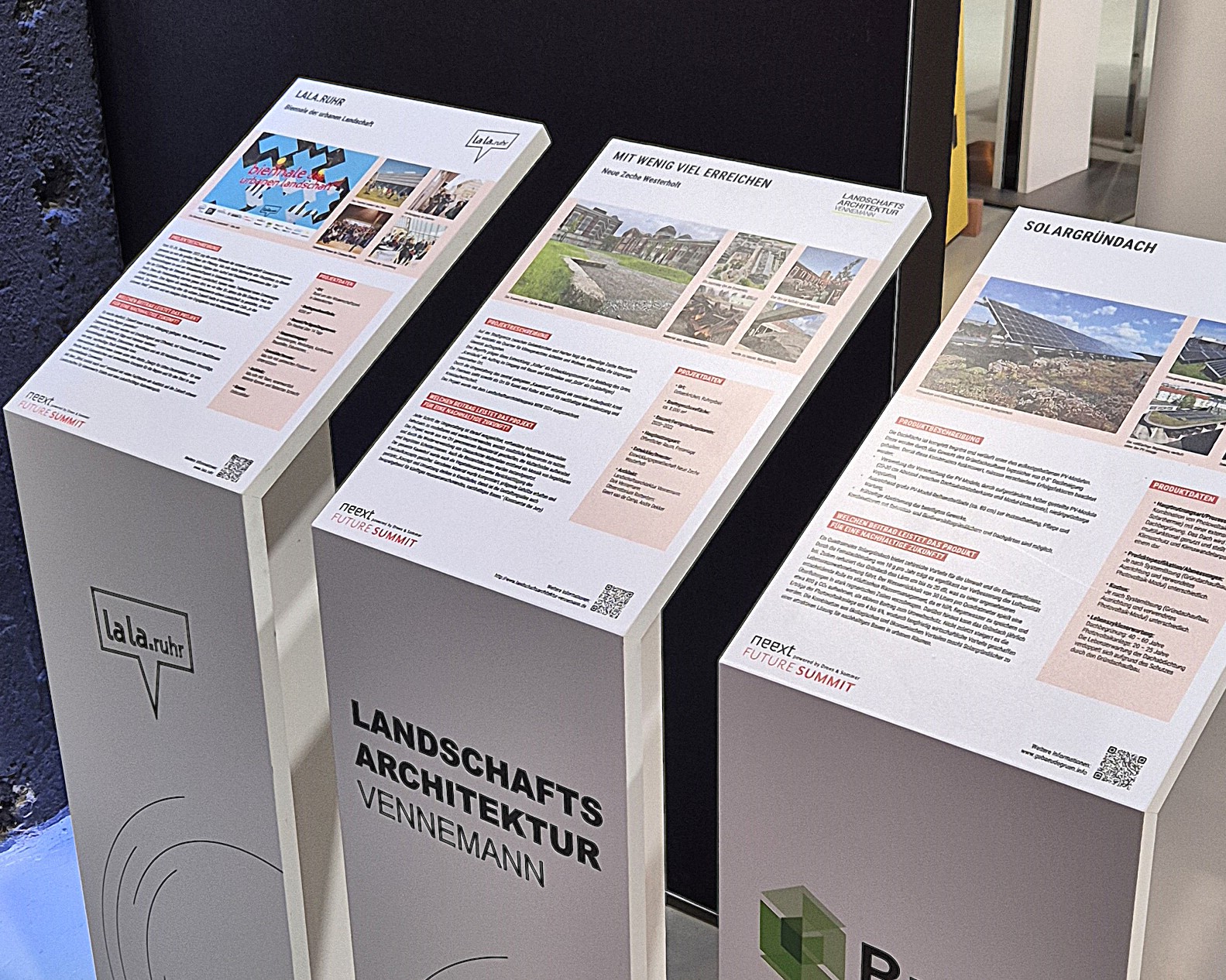
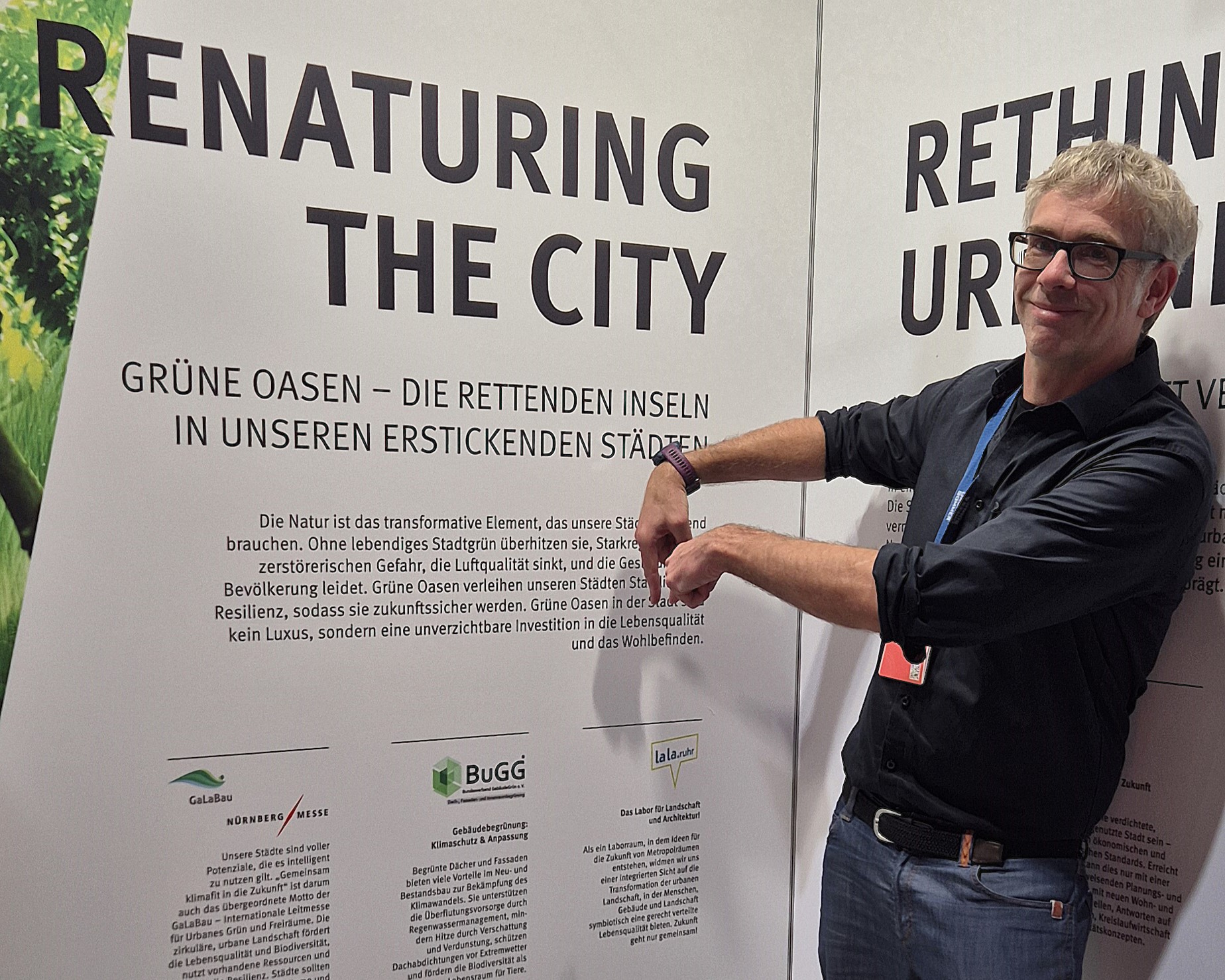
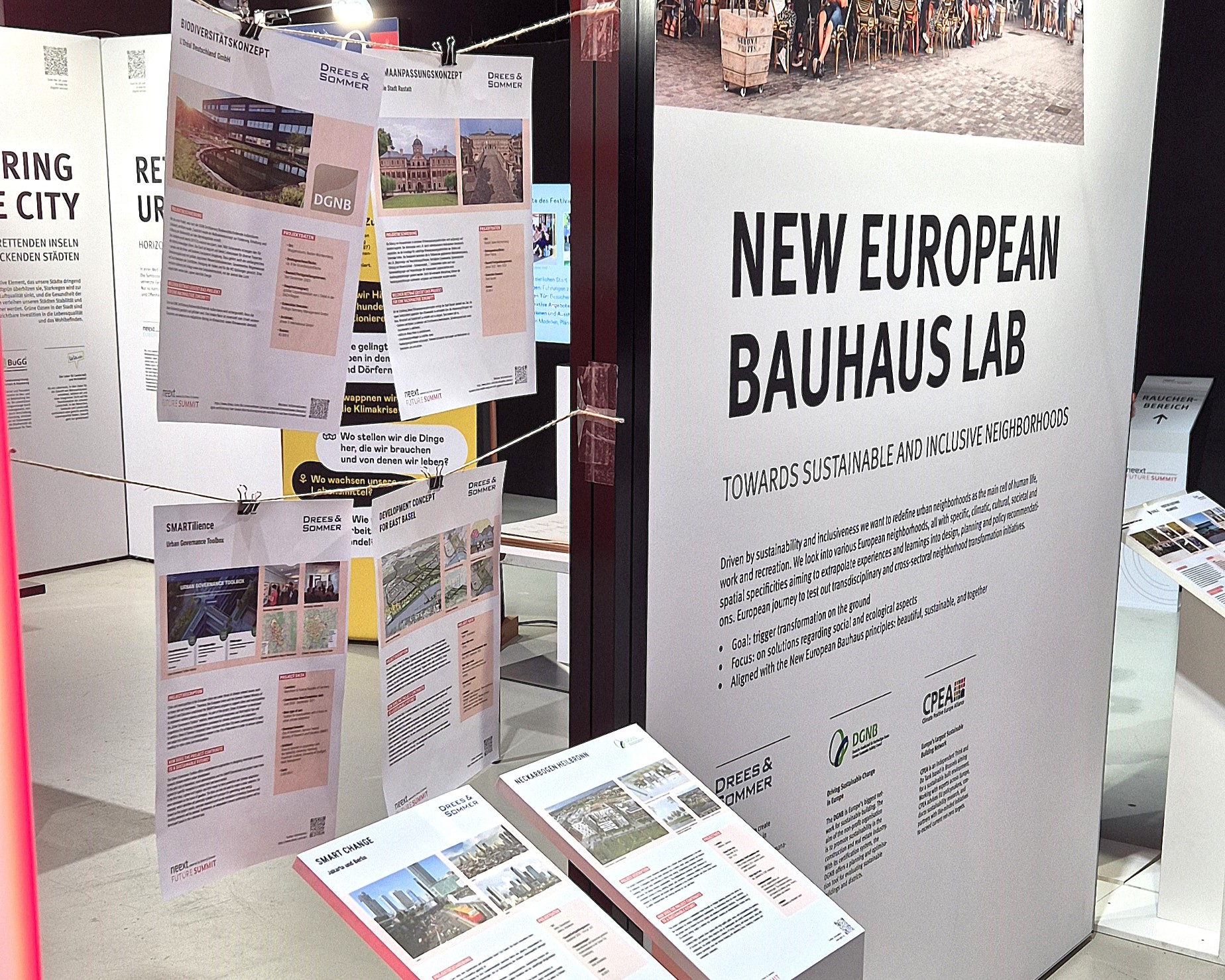

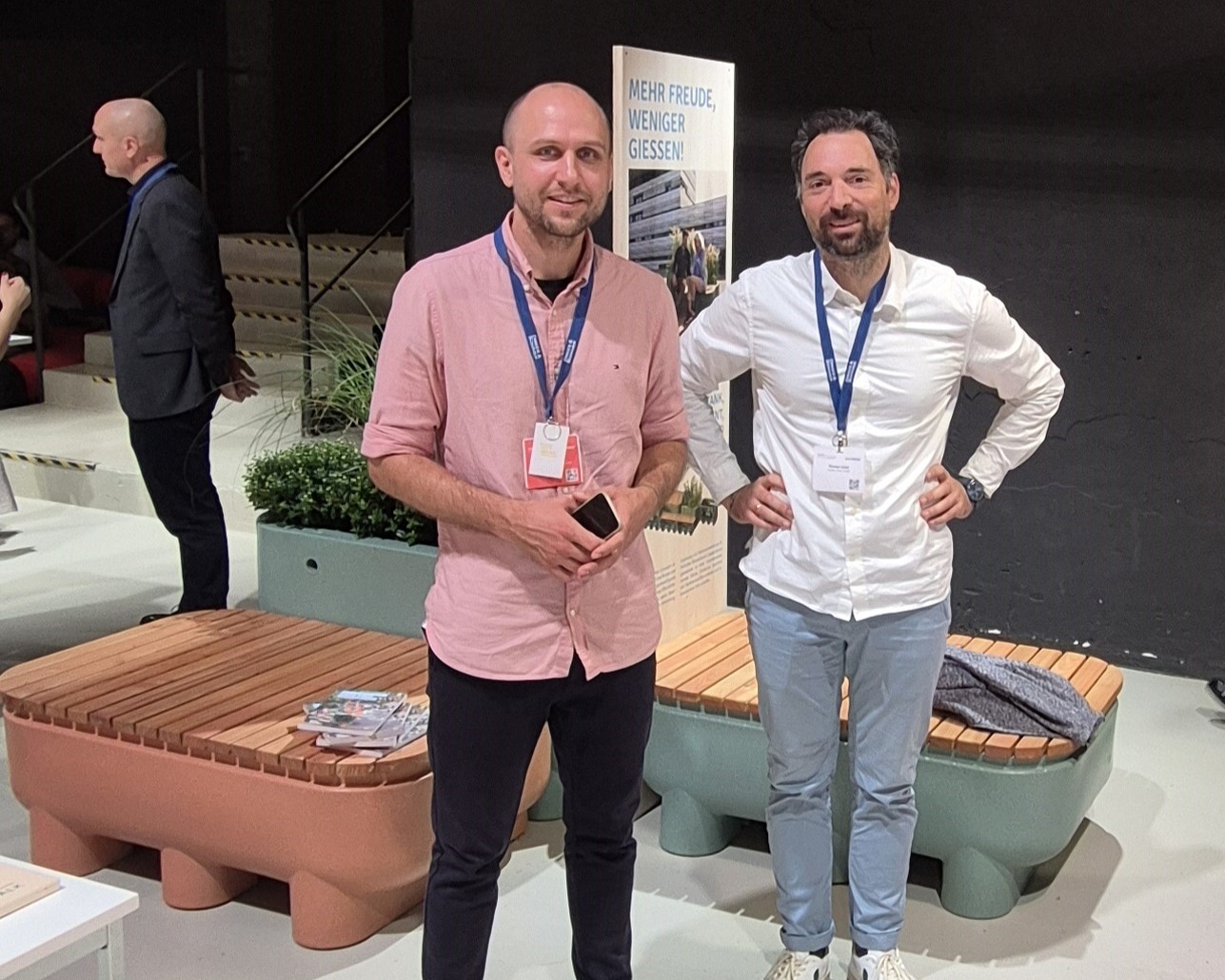


Regenerative, sustainable, diverse
Circular Urban Landscapes!

(UN)LEARNING FOR POSSIBLE FUTURES
(UN)LEARNING FOR POSSIBLE FUTURES
Under the theme (UN)LEARNING FOR POSSIBLE FUTURES, the FAVORITEN Festival spent 10 days exploring the challenges of the present and future through art and discourse. In Dortmund and online, participants (un)learned from and with one another.
WORKSHOP: Seeking and Finding Social Justice – An Exercise in Living Together!
If we don’t find social justice today, we won’t need to search for peace tomorrow. That’s why we’re setting out on this journey. What will we find when we adopt new perspectives and take different paths? What can we learn in concrete terms along the way? Can we repair injustices? We’ll discover and practice coexistence in downtown Dortmund and engage in dialogue with the city’s diverse inhabitants. LINK
The workshop was part of the symposium (UN)LEARNING THEATRE & CRISIS on September 8: How can we confront current crises and (un)learn from one another? On September 8, 2024, at the Museum of Art and Cultural History in Dortmund. With Yacouba Coulibaly (LABSA), Josefine Habermehl (atelier automatique), and Sebastian Schlecht (lala.ruhr) – an exercise in coexistence!
FAVORITEN is a festival for theater, dance, and performance. It has been held every two years since 1985. A festival for everyone from September 5 to 15, 2024, in Dortmund and online.
Mehr dazu unter: https://favoriten-festival.de/
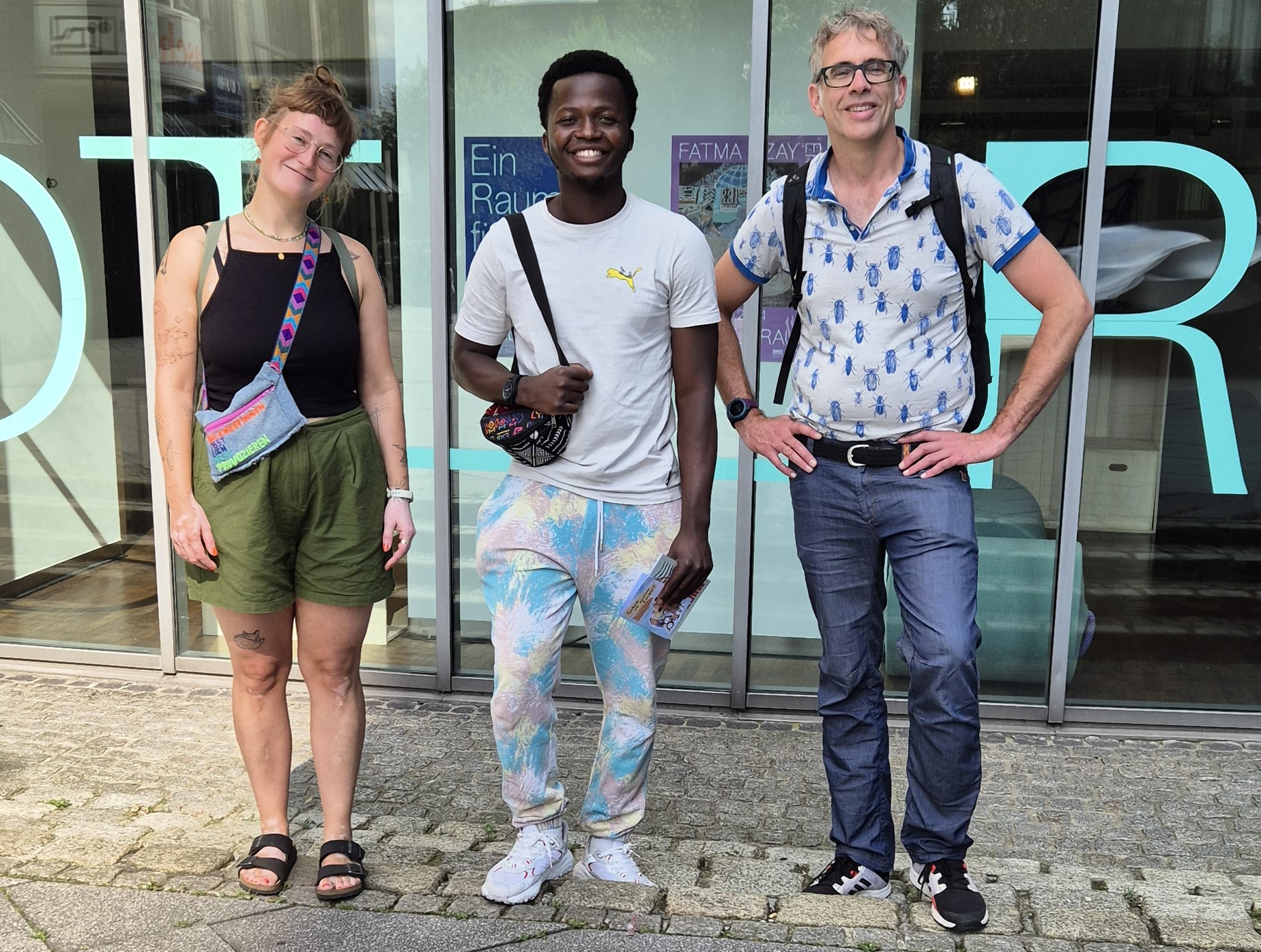


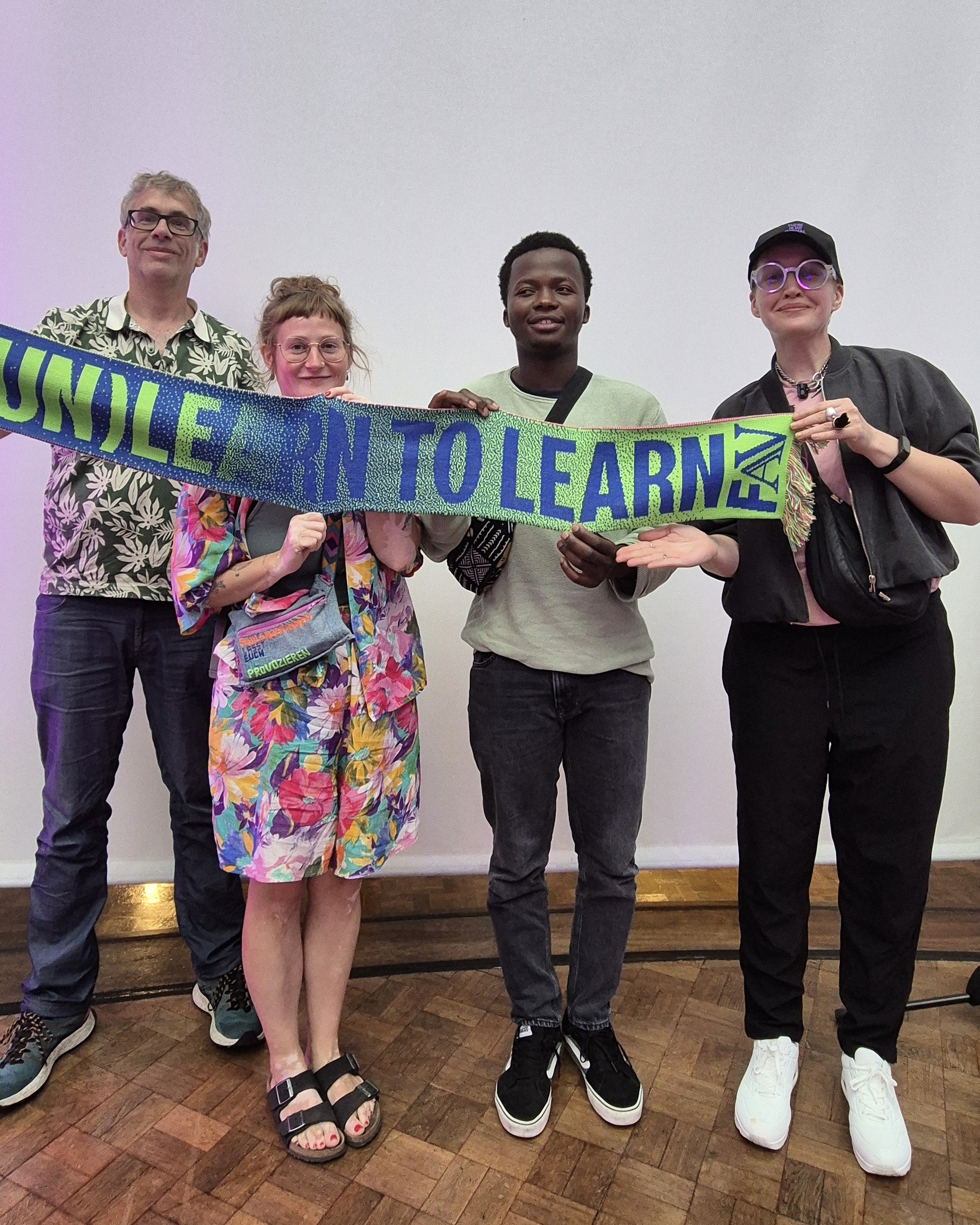
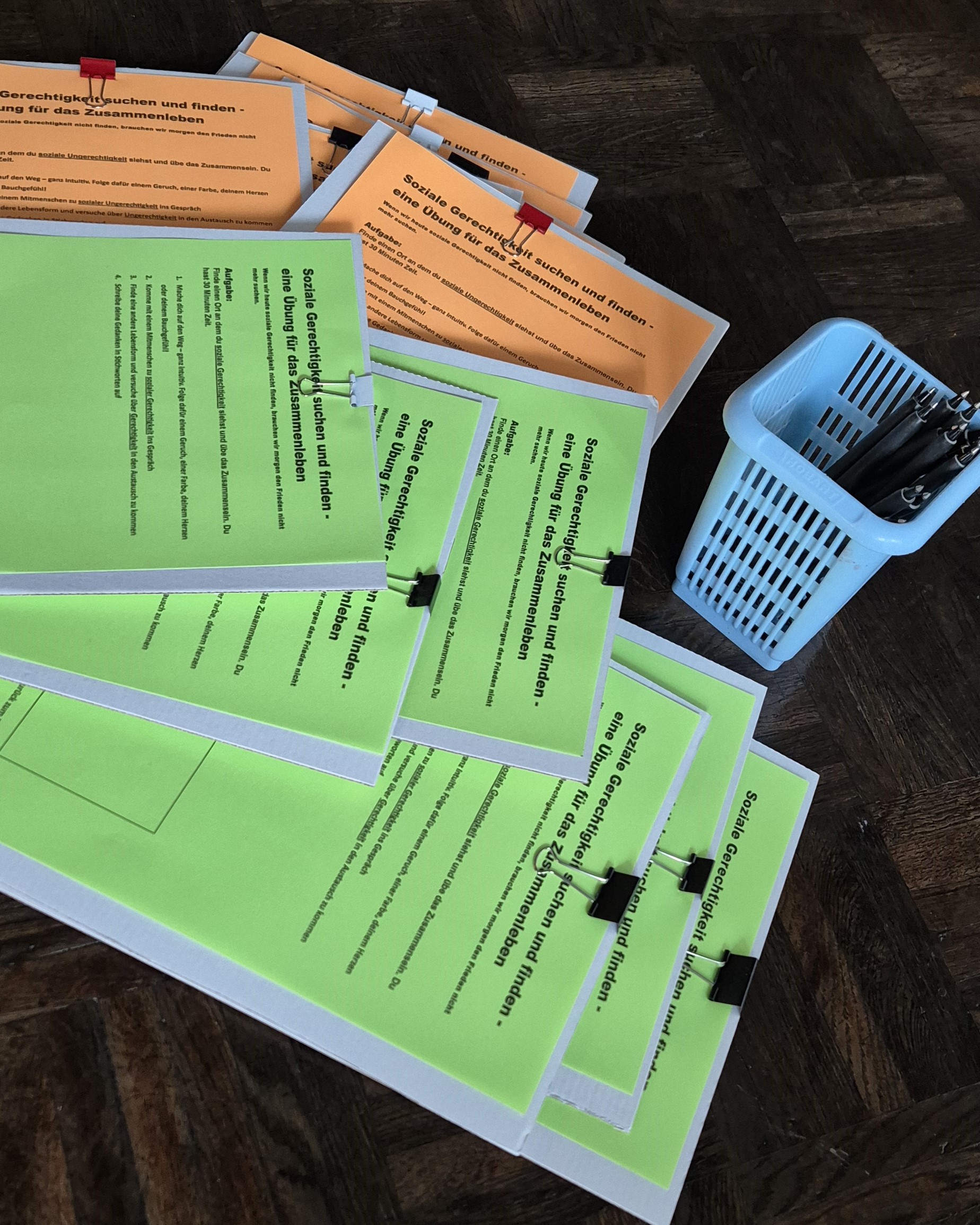
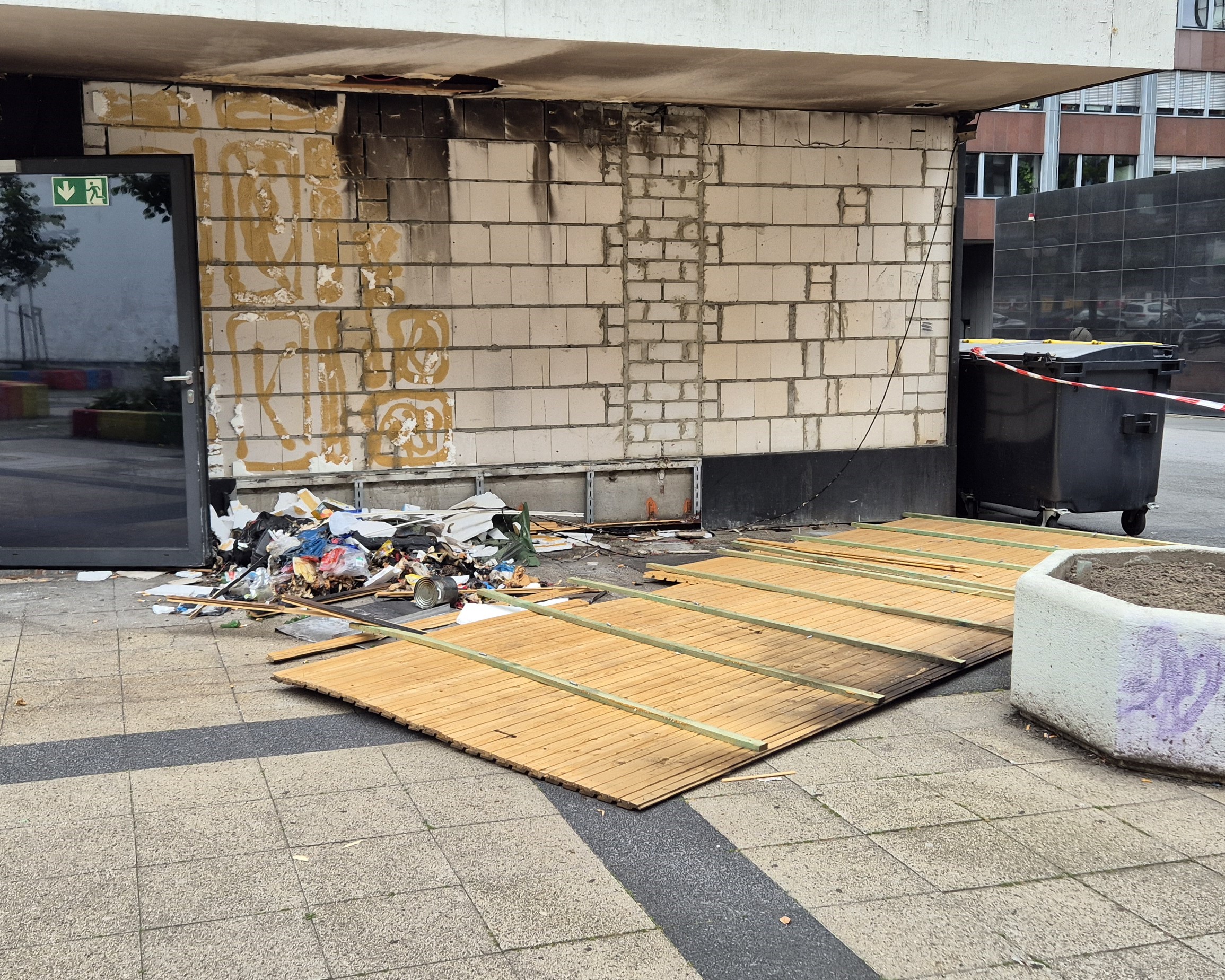
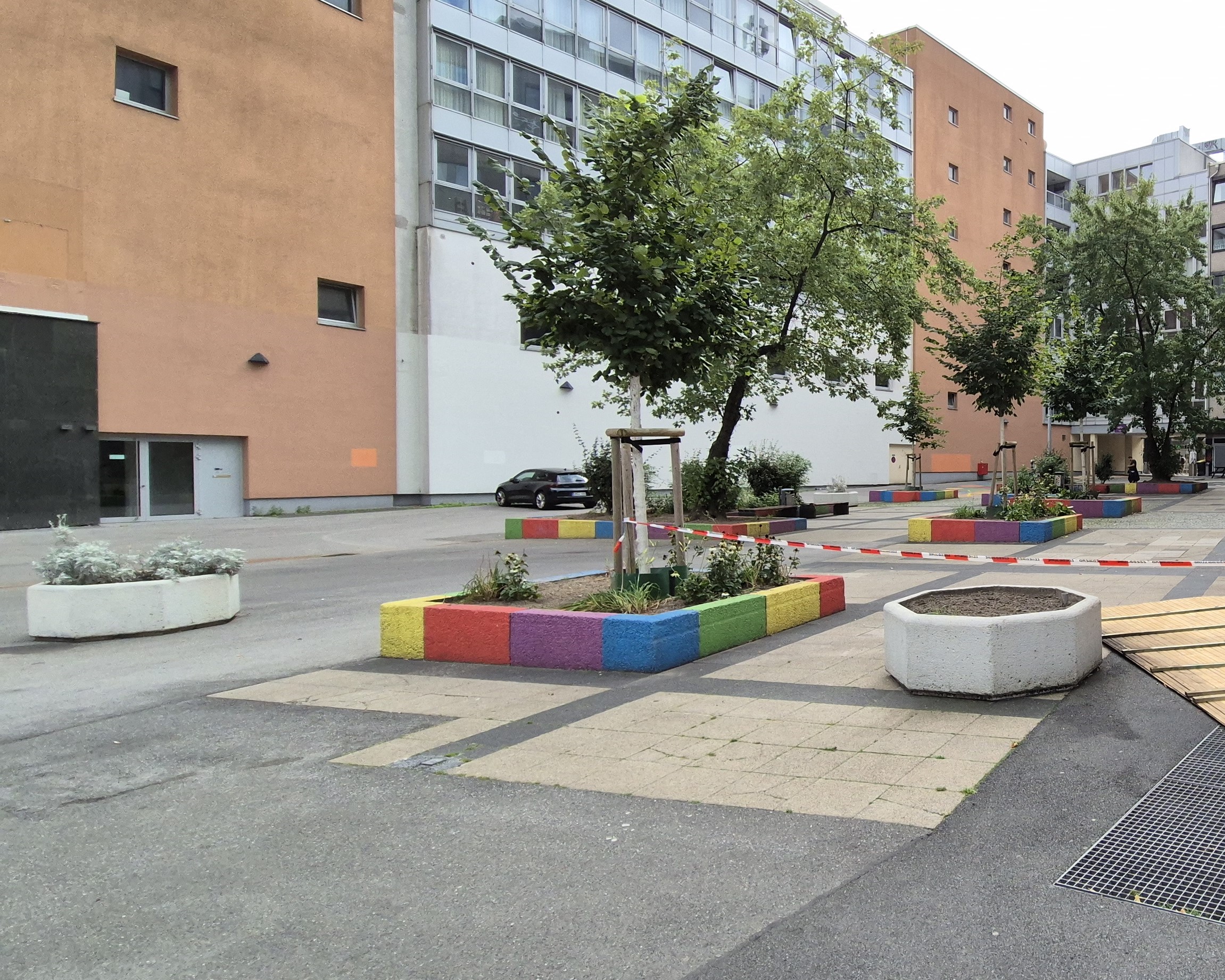


Seeking and Finding Social Justice – An Exercise in Living Together!

THE CIRCULAR CITY LANDSCAPE! Our Landscape-Talk during the GaLaBau2024
THE CIRCULAR CITY LANDSCAPE! Our Landscape-Talk during the GaLaBau2024
The future is circular! Our Landscape Talk at GaLaBau 2024 focused entirely on the circular urban landscape. Together with NEEXT, the New European Ecosystem for Transformation, we explored how the circular urban landscape can be developed in a sustainable way.
Together with Dirk Vennemann, Martin Beltz, Christina Hoffmann, and Götz Schönefeld, we explored how real estate, urban spaces, and landscapes can be developed not in isolation but in synergy to be resilient and livable. The city as a whole is a regenerative resource – how can we work with it?
Landscape architect Dirk Vennemann, together with the team from Observatorium Rotterdam, has redesigned the Kauenhof at the Westerholt coal mine to be 100% circular. Martin Beltz is an expert in green building and develops and implements regenerative systems for roofs and facades. Christina Hoffmann and Götz Schönefeld are developing an international ecosystem at Drees&Sommer to drive the necessary transformation
The discussion also involved the immediate trade fair environment, covering topics such as the first street furniture made of carbon-free steel from Sweden (Vestre), stones made from recycled and cement-free materials (Von Rinn and Godelmann), and sharing systems for chairs and tables by Zuko, as well as the question of the necessary shift toward open spaces analogous to the shift in construction.


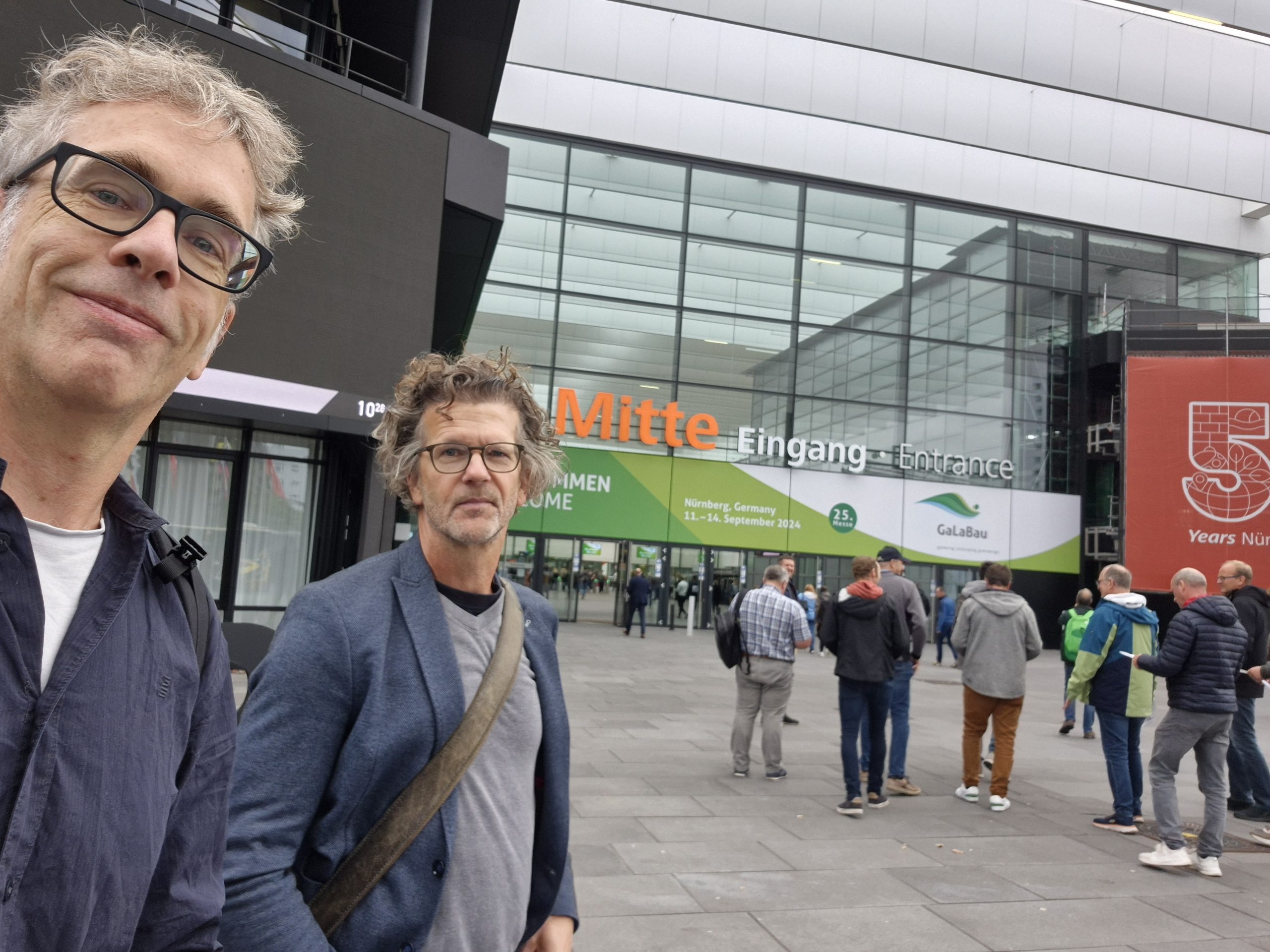


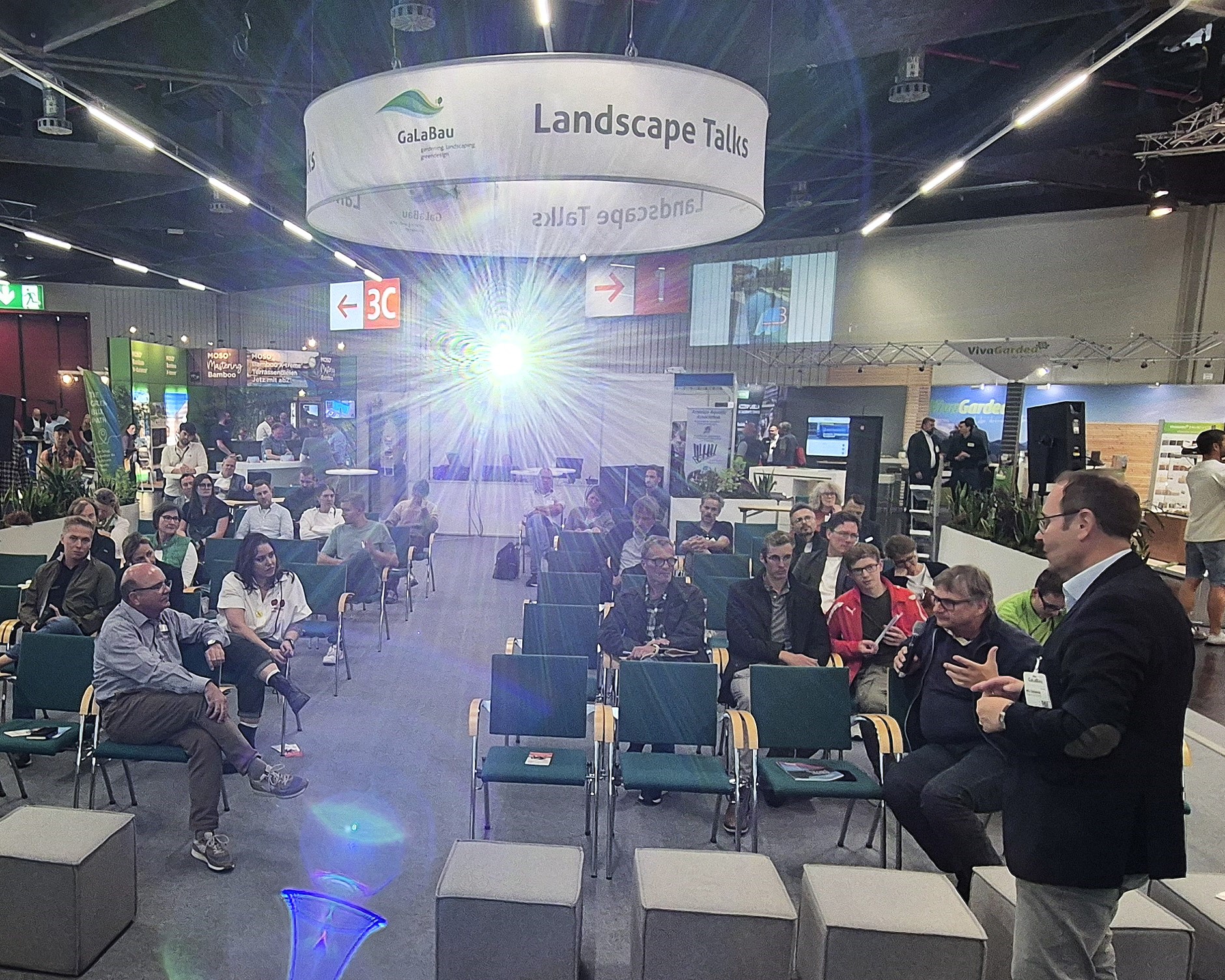
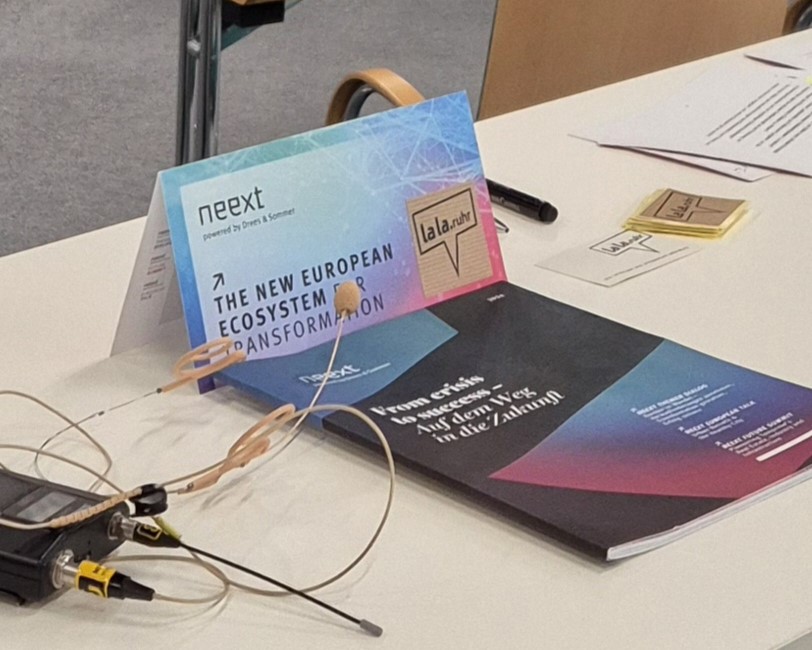
Our Landscape Talk at GaLaBau 2024 was focused on circular urban landscape.
(Un)Learning for possible futures - FAV24 podcast #3!
(Un)Learning for possible futures - FAV24 podcast #3!
As part of our contribution to the Favoriten Festival 2024, we created this podcast in which Sebastian Schlecht talks with Yacouba Coulibaly and Josefine Rose Habermehl about (un)learning and social justice. The podcast series “Theater&Crisis – Exercises in Living Together” was hosted and curated by Margo Zālīte as part of the artistic direction of the FAVORITEN Festival 2024: (Un)Learning for Possible Futures.
In this conversation, we explore questions such as: How can theater be used as a platform to shed light on social injustices and give space to marginalized voices? What spaces for dialogue are needed, and which ones already exist? This episode examines how theater not only tells stories but can also actively contribute to change by opening up new perspectives and highlighting opportunities for social change.
But why not listen for yourself: LINK
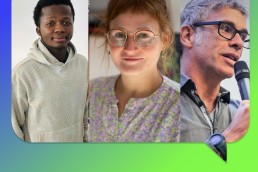
In episode #3 we are talking about social equality!

CO-CREATION OF PUBLIC SPACES - lala.ruhr is a New European Bauhaus Mentor
CO-CREATION OF PUBLIC SPACES - lala.ruhr is a New European Bauhaus Mentor
In 2023, lala.ruhr served as a design and business mentor in the New European Bauhaus program, working with projects such as the “Cabra Figra” in Cascais, Portugal, designed by the firm R/C Rés do Chão.
Rés do Chão specializes in architecture, urban planning, and community engagement. The team develops urban renewal projects and enhances public and community spaces through inclusive participatory processes that foster social cohesion and strengthen trust in institutions.
In our collaborative project, we worked with current and future residents through a community design process to develop a design for a public square in the new “Cabra Figra” neighborhood in Cascais, Portugal. By creating a garden and playground together with the people who will eventually use it, we are building a space that will serve them in the future.
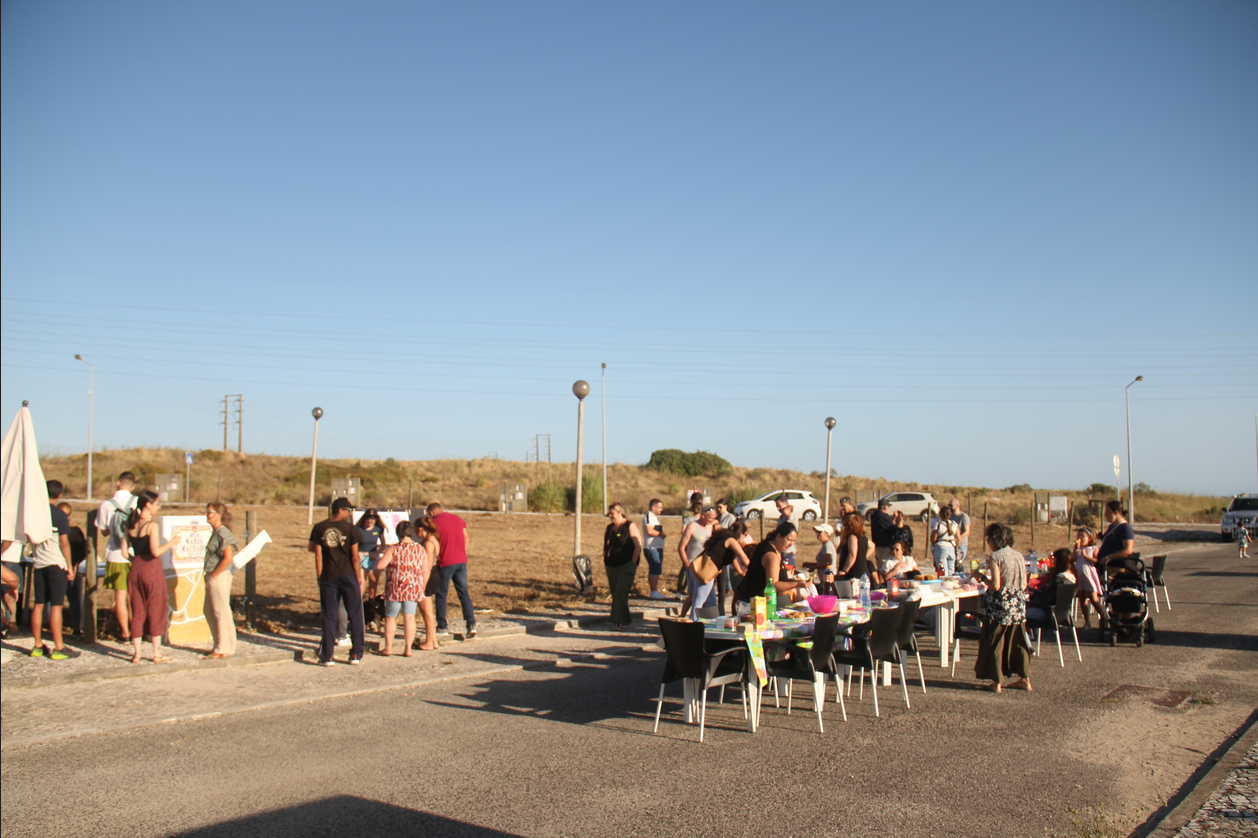
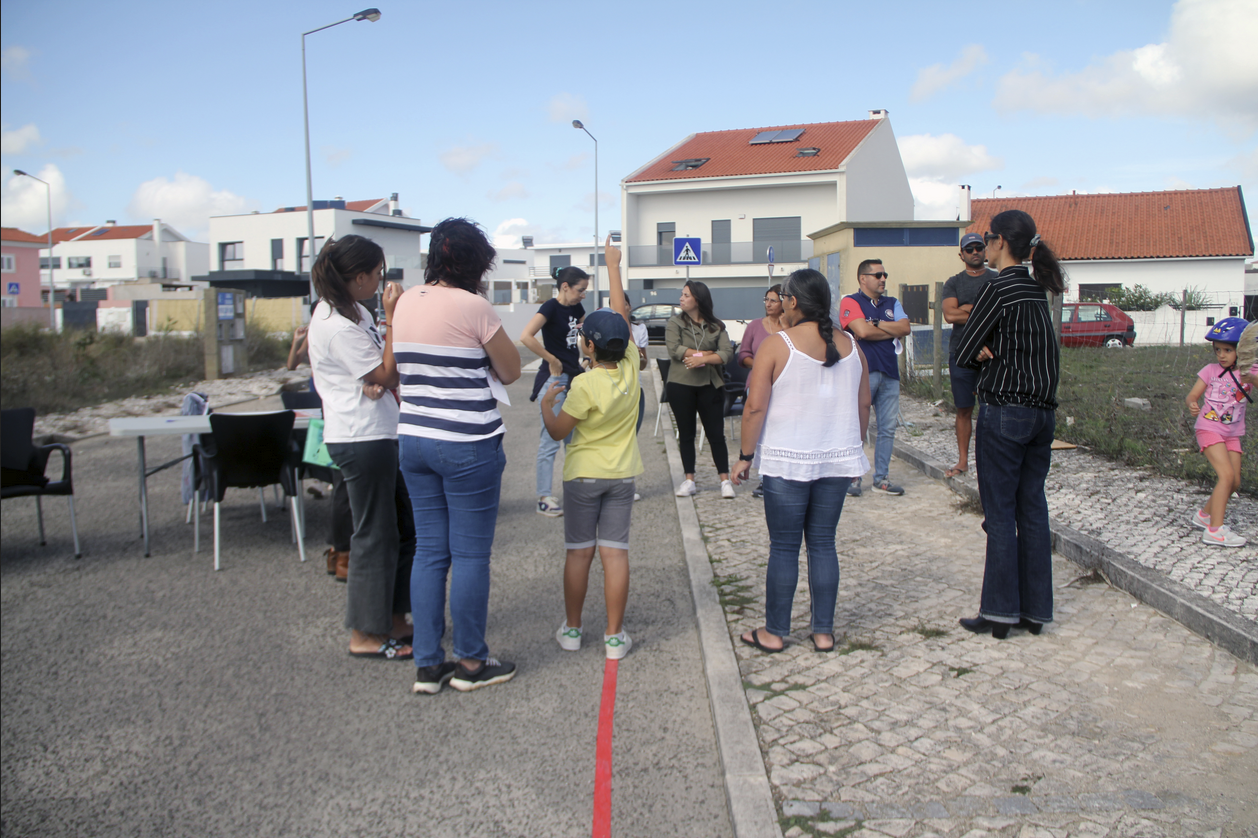


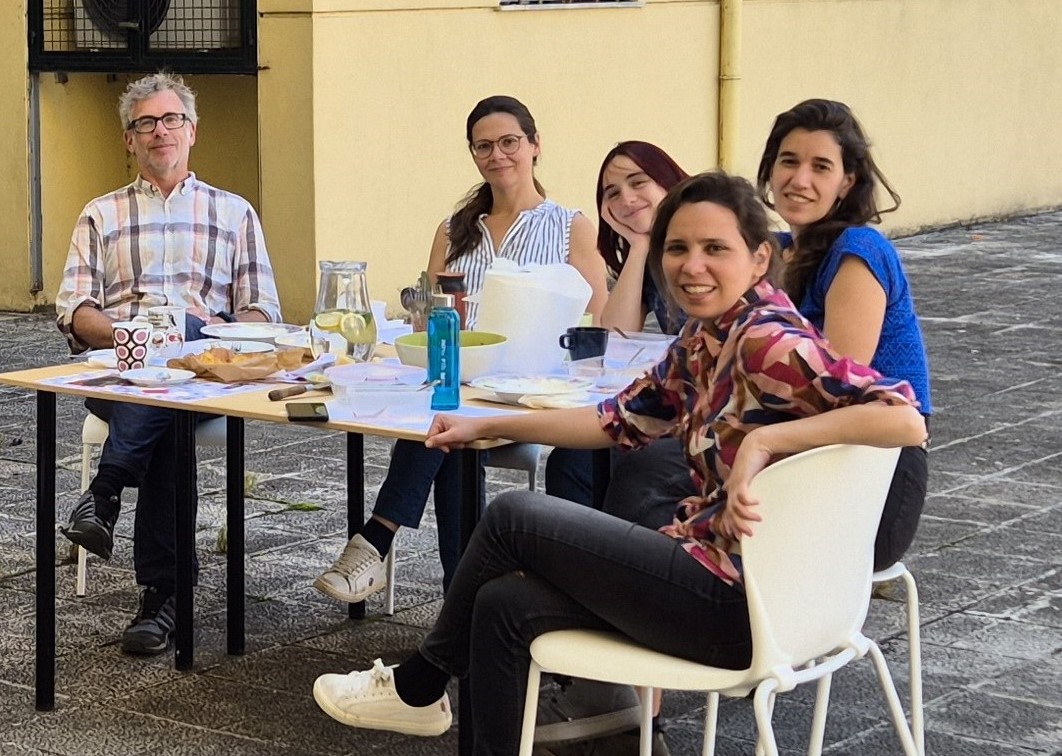
Through a series of workshops and surveys, design ideas were developed, refined, and discussed again with residents. Since this neighborhood on the outskirts of the city is still in the early stages of development, the process has taken on a unique dynamic that addresses the transition from a rural environment to a future urban area.
The mentoring program was designed to provide technical expertise to support the projects while ensuring adherence to the principles of the New European Bauhaus Compass, and was managed by the EIT. The New European Bauhaus program supported the participatory process, and the resulting design will be implemented by the city of Cascais in the near future.
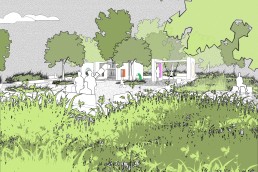
A public square was designed for the new “Cabra Figra” neighborhood in Cascais, Portugal, through a community-driven design process. (c) Rés do Chão R/C

Working Together to Create the Greenest and Most Livable Metropolis - Networks for Green Infrastructure!
Working Together to Create the Greenest and Most Livable Metropolis - Networks for Green Infrastructure!
On the way to becoming the greenest and most livable metropolis! With its Green Infrastructure Strategy, the Regional Association for the Ruhr Metropolis has set regional goals and identified opportunities for action. This milestone was celebrated during the symposium and at the Green Infrastructure Network Day in April 2024. Together with the Urbanisten from Dortmund, we also made our way to the Ruhr Regional Association’s networking day. Through workshop-style sessions, participants got involved and had the opportunity to network; they were inspired by successful local projects and academic insights, and everyone was eager to know how the strategy would now be implemented.
As early as 2021, lala.ruhr made a significant contribution to the strategy and development of a green and livable metropolis with its “Handlungsempfehlung zur Kommunikation Grüner Infrastruktur” Through several workshops, an online landscape festival, and the “Biennial of Urban Landscape” in 2022, we were happy to participate and promote the discussion and innovation that will transform our Ruhr metropolitan area into a livable, resilient, and decidedly green home for 5.1 million people – even in the face of climate change. We look forward to our shared future: green, equitable, (bio)diverse, resilient, productive, and livable!
#thinklandscape
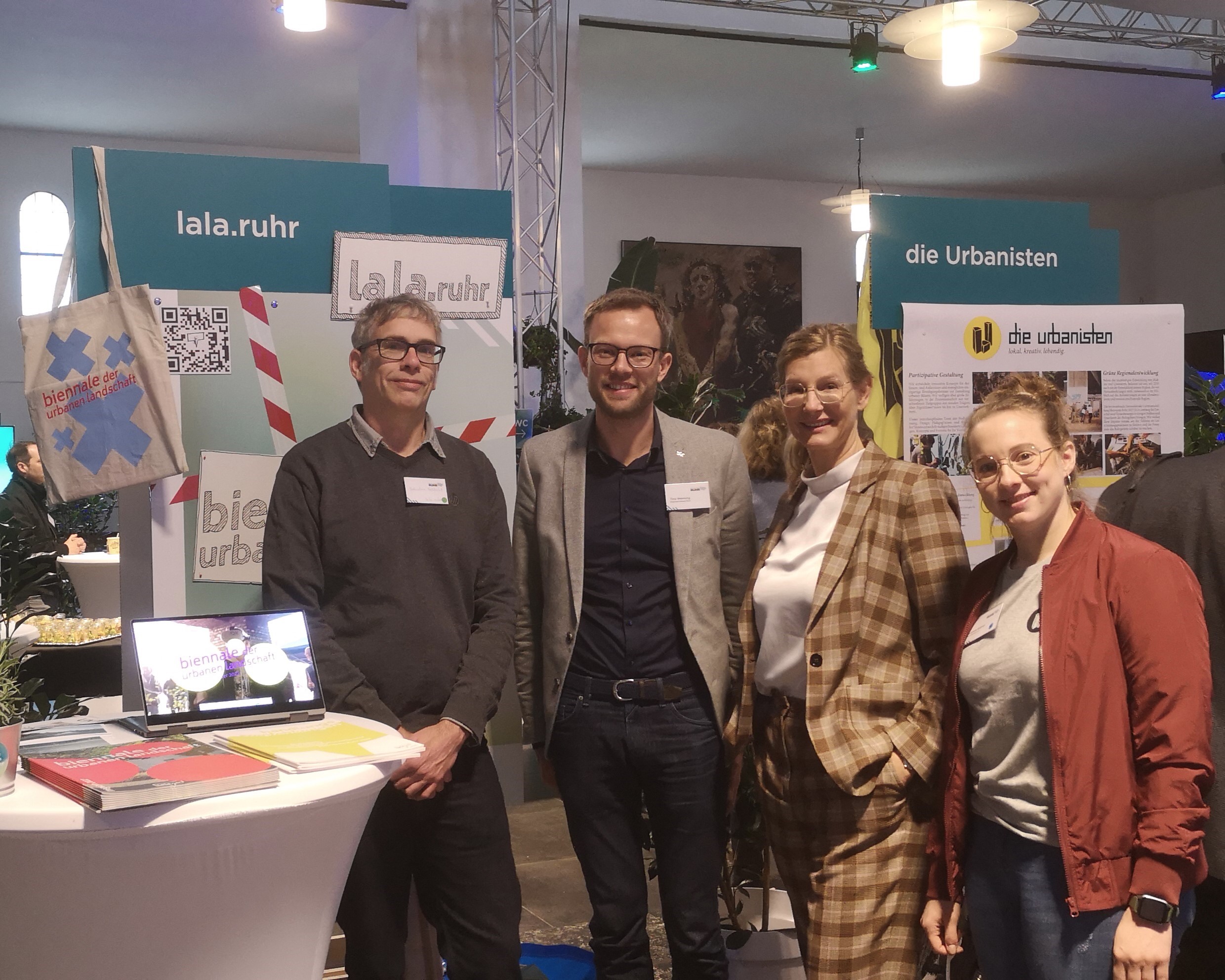

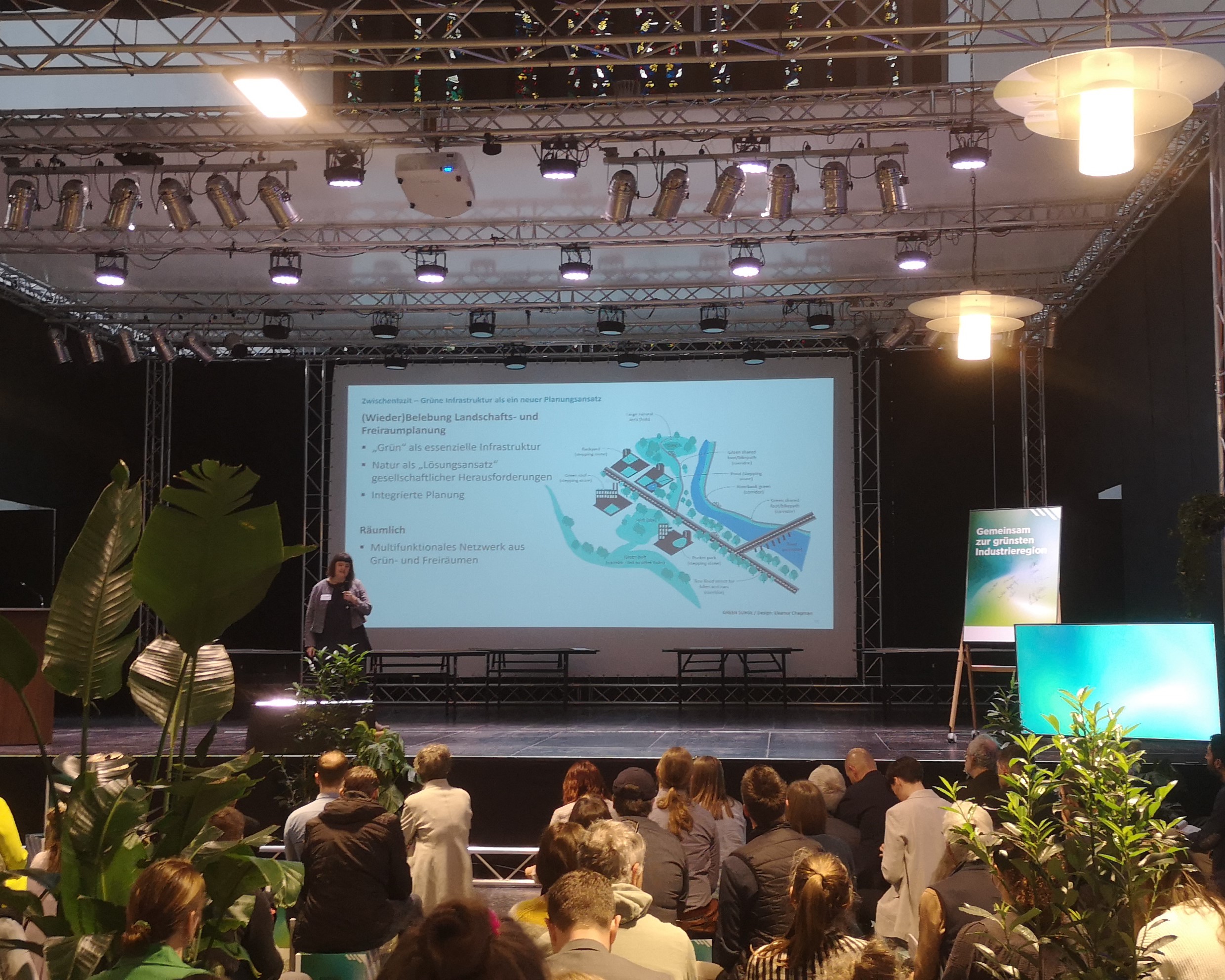


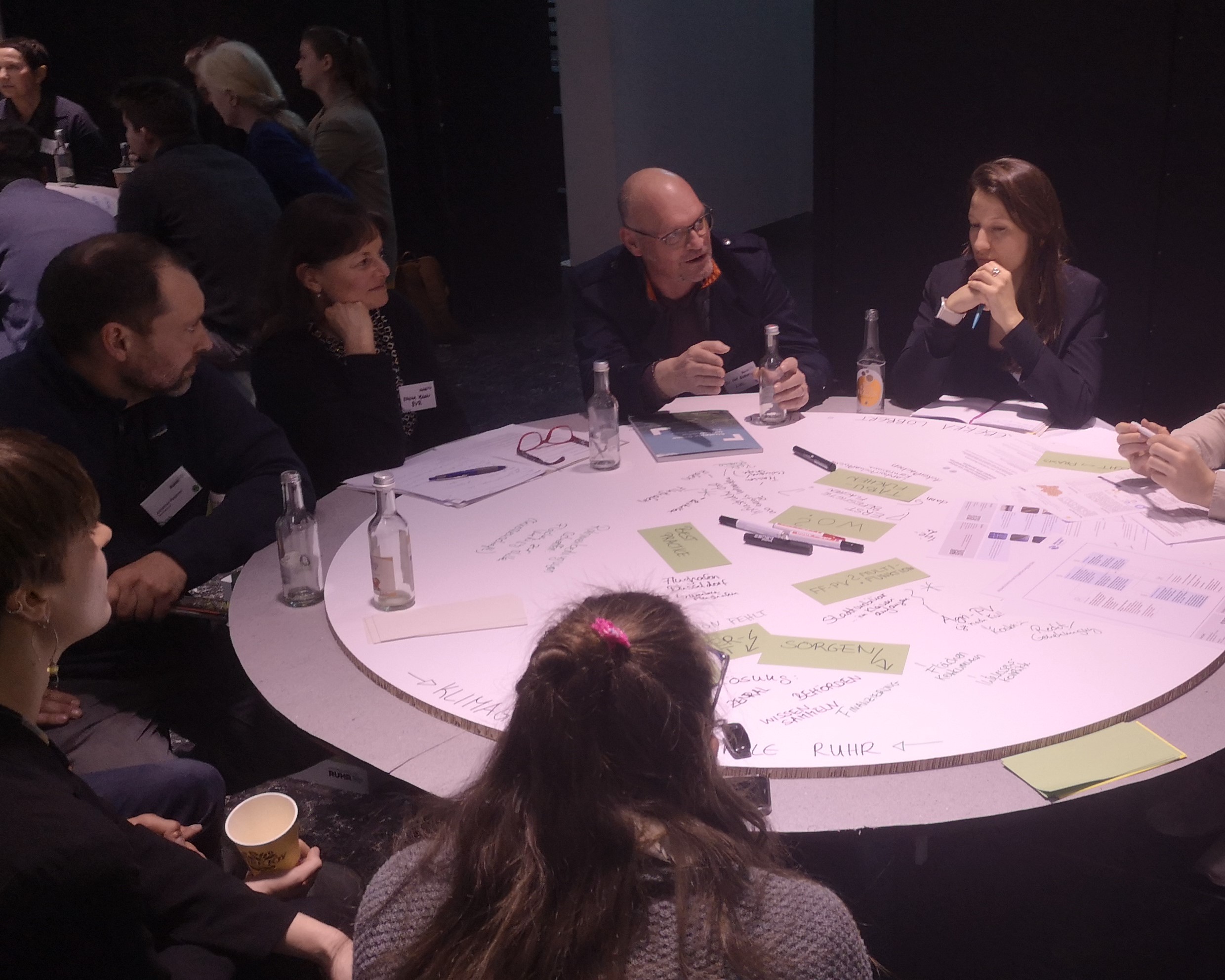
Let’s shape the future of the Ruhr region together! For a green and livable metropolis.

UNDER ONE ROOF - “We Are the Future” Theme Day at the Museum Folkwang
UNDER ONE ROOF - “We Are the Future” Theme Day at the Museum Folkwang
SATURDAY, FEBRUARY 24, 2024, 11 AM – 4 PM
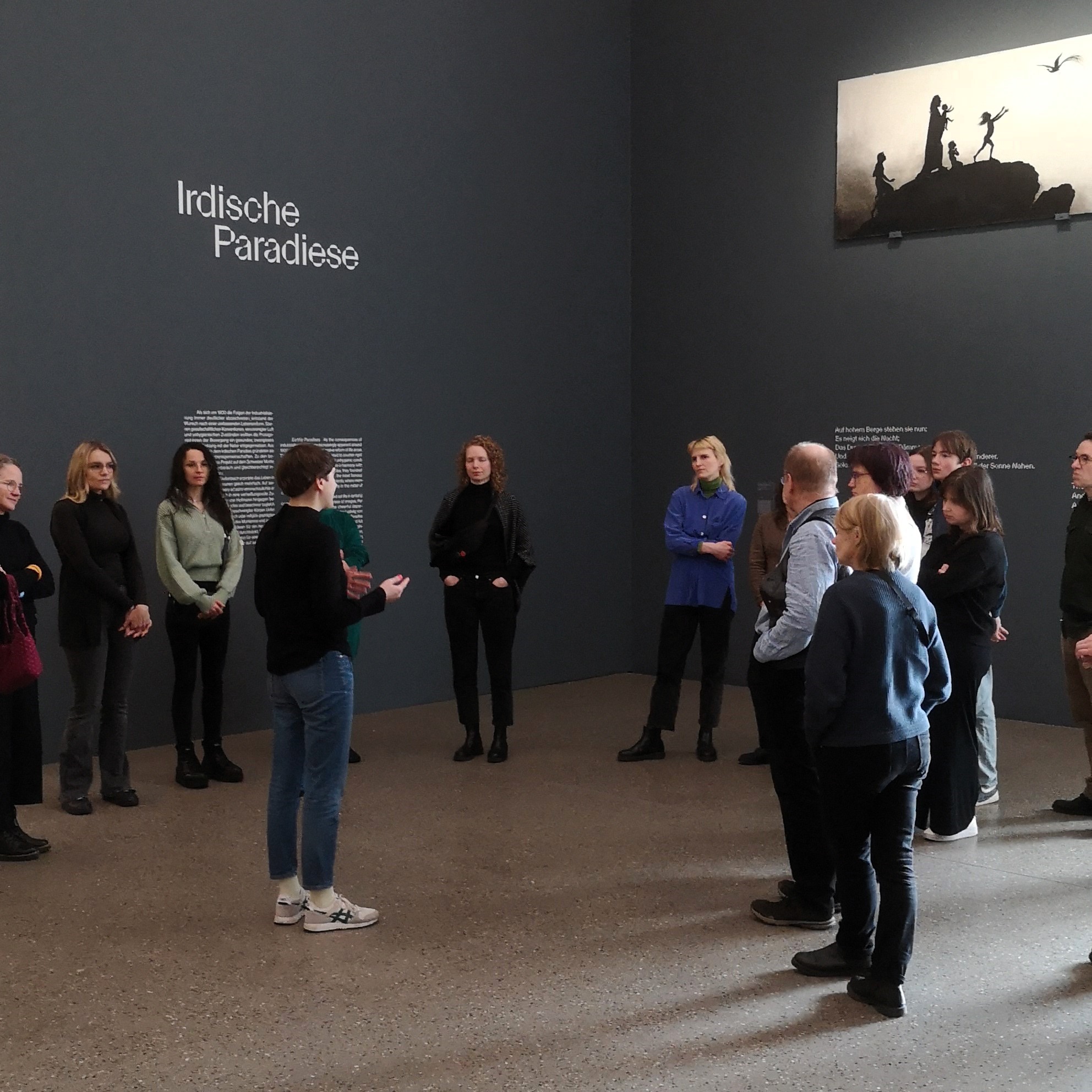
The exhibition “We Are the Future: Visions of New Communities” at the Museum Folkwang in Essen presents artistic utopias of communal living, spanning from the Lebensreform movement around 1900 to the present day. On the occasion of the exhibition, we would like to reflect on how we want to live together in the future and what fosters community. What conditions are necessary for this – architecturally, urbanistically, ecologically, and politically? Which historical and contemporary models can serve as a guide for us?
Following a guided tour of the exhibition, a workshop including a city walk took place, which was followed, after a joint lunch break, by a lecture on architectural history and a moderated expert discussion. When addressing questions about the future coexistence of humans, animals, and plants in the built environment, we placed a special focus on the Ruhr region. In addition to experts in urban planning, new forms of housing, and urban ecology, residents of exemplary projects also shared their perspectives. The event was open to everyone and thrived on the ideas and contributions of the participants.



PROGRAM
PART 1
11 a.m. | Curator-led tour of the exhibition *We Are the Future: Visions of New Communities* with Antonina Krezdorn
Meeting point: Foyer, Museum Folkwang
12 p.m. | Family workshop *The City Is a Good Home* – How Can We Live Well Together?
With Annette Bathen (die Urbanisten e. V.) and Sebastian Schlecht (lala.ruhr)
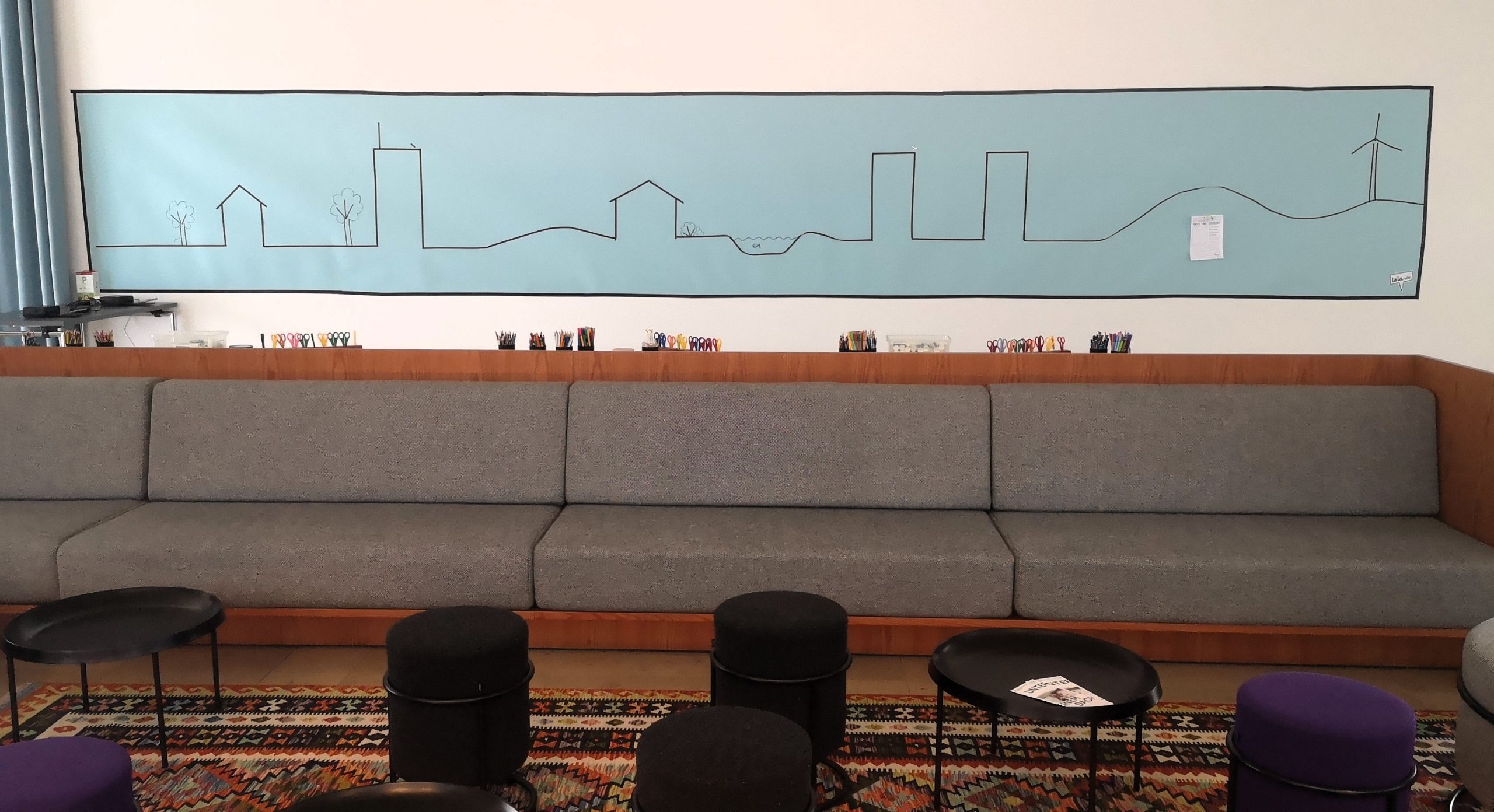
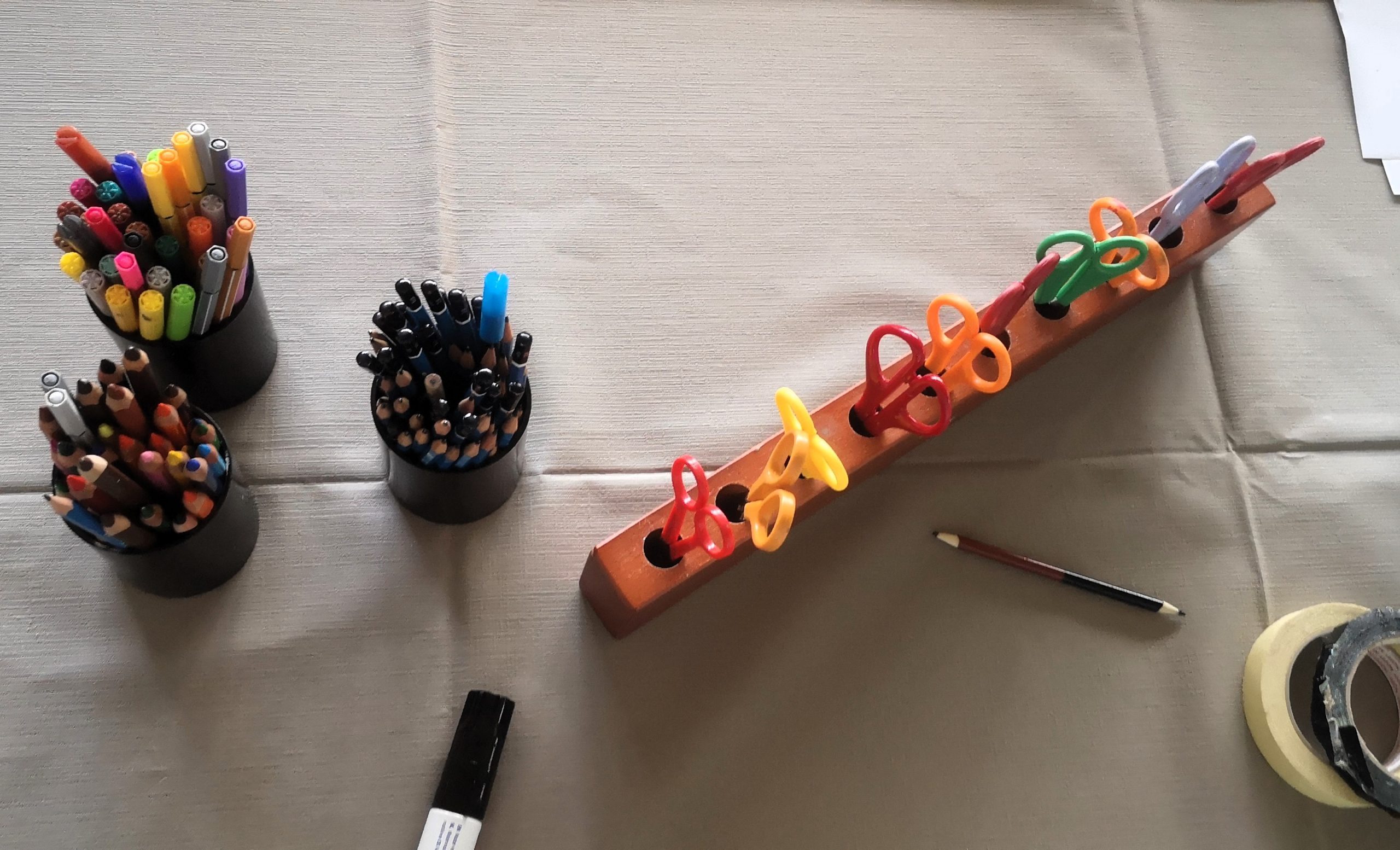
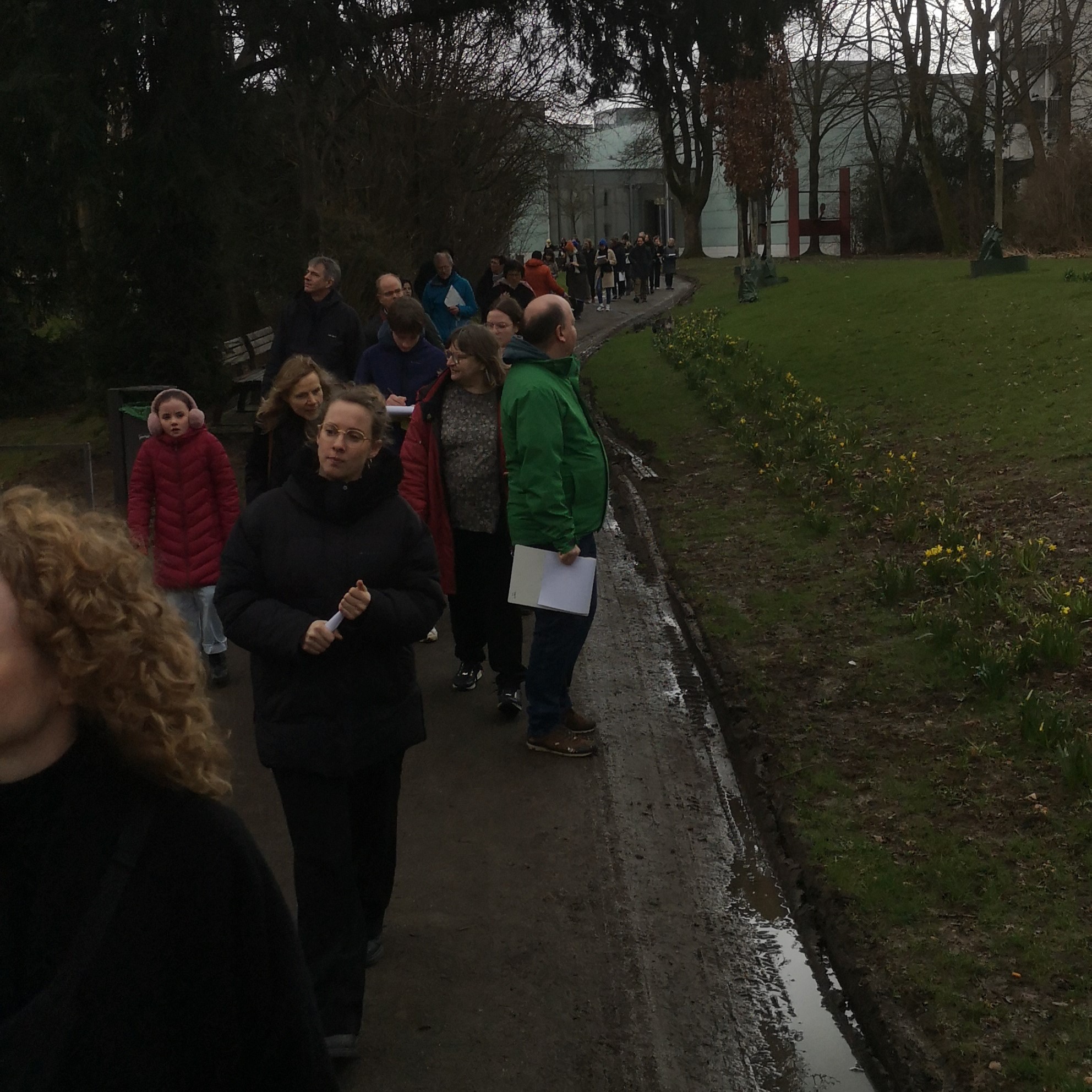
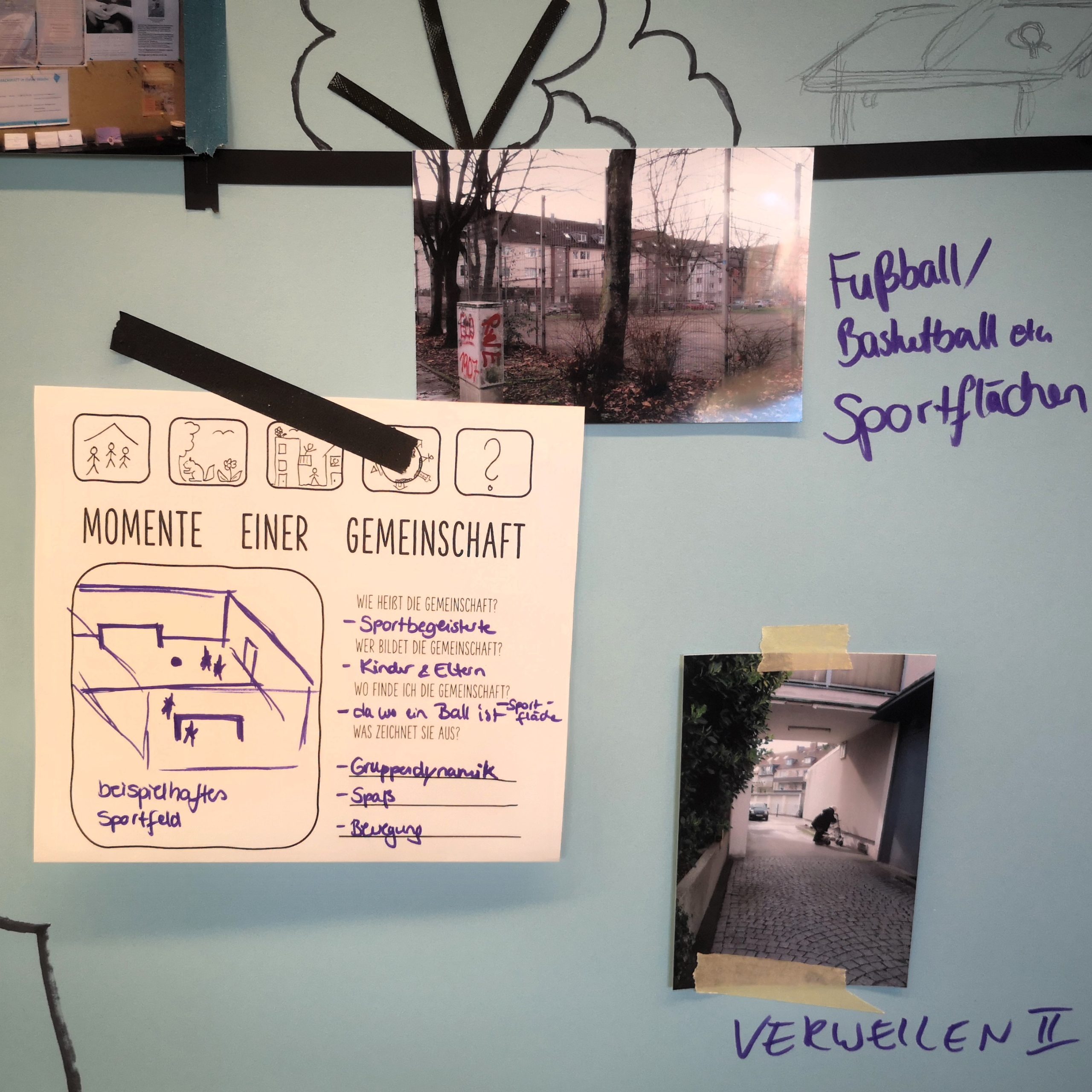
Drawing on Bruno Taut’s thesis *The Earth—A Good Home*, we will explore the city around the museum with open eyes, discovering various forms of (bio)diverse coexistence. Using found objects, sketches, photos, and notes taken along the way, we will then create a representation in the museum of the participants’ ideas about today’s interconnected communities. Finally, during the lunch break, we can discuss new forms of coexistence.
Location: Salon Folkwang
2:00 p.m. | Group lunch at Salon Folkwang
PART 2
2:30 p.m. | Forms of communal living in European architectural history
Lecture by Anna Kloke (TU Dortmund)
3:00 p.m. | Discussion: Under One Roof
Moderator: Sebastian Schlecht (lala.ruhr)
With Anna Kloke, Manuel Färber, political and economic scientist, WohnBund-beratung NRW, and Peter Keil (Biologische Station Westliches Ruhrgebiet e. V.)
Location: Salon Folkwang
Admission: free (includes food and drinks)
Registration for Part 1 at: info@museum-folkwang.essen.de
Concept: Anna Kloke, TU Dortmund; Sebastian Schlecht, lala.ruhr, in collaboration with Peter Daners, Museum Folkwang
Superstudio
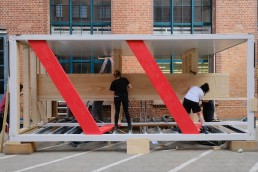
Gli Atti Fondamentali, Vita (Supersuperficie). Frutta e vino, 1971
Collage and print on paper
Centre Pompidou, Paris, Musée national d’art moderne/Centre de création industrielle
Acquisition, 2000
© Superstudio
Photo: bpk/CNAC-MNAM/Georges Meguerditchian
Takeover*: Circular construction with "waste"
Takeover*: Circular construction with "waste"
We are nearing the end of our journey through the “waste complex.” Our final topic: Reboot Architecture—circular construction for a sustainable future for our cities. After all, the majority of a building’s environmental impact stems from material consumption. The construction sector generates an enormous amount of unnecessary waste. Wouldn’t it make sense to use materials that are just as durable as conventional ones but can be reused multiple times? And might it even be possible to construct new buildings from “waste”? Yes—the foundation for this is the circular economy, which makes it possible to meet growing resource demands in a lasting and sustainable way. After all, waste doesn’t always belong in a landfill. For example, old wood panels or metals can be repurposed to create new buildings, with clay serving as a versatile “binder.” The “Natural Building Lab” (NBL), a university-affiliated institution at the Technical University of Berlin, carries out such projects. The NBL was founded in 2017 as a research group for “Structural Design and Climate-Responsive Architecture” under the direction of Prof. Eike Roswag-Klinge.
The Natural Building Lab operates as part of a transdisciplinary network that carries out projects applicable to teaching, research, and practice. Working with students is particularly close to their hearts.
The team consists mainly of architects, but is expanded through collaborations with civil engineers, graphic design firms, landscape architects, and communication designers. Their projects clearly focus on natural building materials, clay, and urban timber construction. Most of these materials are sourced from demolished buildings or spaces, because nothing should be thrown away unnecessarily.
ZU/FLUCHT Open-Air Exhibition:
The ZU/FLUCHT project exemplifies the work of the NBL and was carried out as a master’s thesis project with 20 students from the Technical University of Berlin. In collaboration with the Exilmuseum Berlin Foundation, old Tempohome containers (housing for refugees) were converted and redesigned into an extraordinary entrance area for the Exilmuseum, which is currently under construction. The former living spaces were modified using existing materials such as metals (especially sheet metal), wool, and bonded materials. The project aims to stimulate discussion, particularly on the topics of material waste and reuse in the construction sector. The goal was to demonstrate what can be done with old containers, which are often manufactured and then discarded after their primary use. From June to October 2021, the temporary open-air exhibition was on view at Anhalter Bahnhof in Berlin. The planning, construction, and implementation spanned 18 months and were carried out over the course of two semesters at the Technical University of Berlin.
Especially in this era of sustainability, such projects are generating significant public interest, including from the State of Berlin. Circular construction is trending, and “I have a feeling this is becoming the new ‘sustainability,’” says Matthew Crabbe, a doctoral candidate at the NBL. The definition of circular construction is as follows: The proper, circular use of building materials and resources, as well as ensuring they have a long life cycle, promotes cascading use. This involves using renewable, sustainable, or reusable building materials that are climate- and environmentally friendly. The clear focus is on reducing waste and emissions.
Circular construction is supported by the “Cradle to Cradle” (C2C) approach developed in the 1990s by Michael Braungart (a German chemist) and McDonough (an American architect). This approach calls for a comprehensive and consistent circular economy in which all resources are kept within a cycle. The three principles of Cradle to Cradle (C2C) are: waste = nutrient, or in other words, everything is designed as a resource for something else; use energy from renewable sources; and promote diversity.
The goal is for the Rhine-Ruhr region to become a global hub for circular value creation (“Circular Valley”) in the coming years. Circular buildings (structures made from materials and products selected for their reusability) are not yet widespread in North Rhine-Westphalia, with the exception of the Kreislaufhaus at Zollverein in Essen. The new circular administrative building for the RAG Foundation and RAG AG is located at the Zollverein UNESCO World Heritage Site in Essen. The building was designed and constructed by kadawittfeldarchitektur. The materials were selected based on their health and environmental impacts as well as their recyclability. At the end of the building’s lifespan, it is intended to serve as a source of raw materials. The green roofs, urban gardening areas, and animal habitats are also designed to be permanently sustainable. Additionally, “The Cradle,” a seven-story hybrid wood office building, is currently under construction in Düsseldorf’s Medienhafen. The carbon footprint was reduced during construction thanks to the use of wood, a renewable resource. The creation of office spaces also provides economic added value.
We’d like to thank the Theaterallianz Mühlheim an der Ruhr for letting us take over their Instagram channel! We had a lot of fun doing it, and we hope we were able to share new information about waste and the landscape with our readers. So always remember: reuse, reduce, recycle! Not everything you no longer need belongs in the trash! 😉
Writer: Stephanie Stiem
*Starting in January 2022, lala.ruhr will be taking over the Instagram account of vier.ruhr—the alliance of Mülheim theaters—for three weeks. Our theme: the waste complex. We’re taking you on a digital journey through the region and beyond—to places where something is created from waste or where people work with what we colloquially refer to as “trash.” We invite you to think about the urban landscape of the Ruhr Metropolis in circular terms and to discover all materials as part of cycles. We’re featuring the company HeimatERBE, which, among other things, focuses on transforming areas previously viewed by the public as “useless” and enables commercial enterprises to operate in an environmentally neutral way.
vier.ruhr is the theater alliance comprising Theater an der Ruhr, the Mülheim Theater Festival “Stücke,” and Ringlokschuppen Ruhr. Funded as part of the NEUE WEGE program by the Ministry of Culture and Science of the State of North Rhine-Westphalia in collaboration with the NRWKULTURsekretariat.
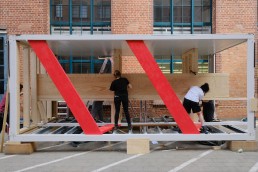
Construction and Renovation for the ZU/FLUCHT Open-Air Exhibition: As part of the project, containers that were originally used as living quarters for refugees were repurposed.
©Natural Building Lab, Berlin
Takeover*: The Urban Mining Valley!
Takeover*: The Urban Mining Valley!
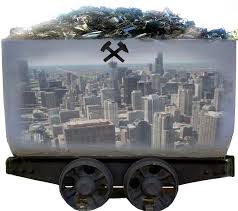
As is well known, the Ruhr region has a history spanning decades of lignite and hard coal mining. As early as the 19th century, the economic focus was on the iron and steel industry. The coal and steel industry, including many workers from abroad, drove significant urban growth at that time. Due to the coal crisis in the 20th century, mining operations were ultimately shut down in 2018, after a full 150 years of mining.
So what now? Where do our current and future materials come from today? And what does the use of secondary raw materials look like? A 100-square-meter apartment alone contains 7,500 kg of metals, and 1.6 billion cell phones contain around 38 metric tons of gold. One potential solution: the circular economy as a source of raw materials. “Urban mining” can be translated as “urban mining.” Until recently, the term was primarily associated with the excavation of old landfills. However, the central aspect of the urban mining approach is recycling – the reuse of materials. Urban mining helps reduce raw material shortages, as well as the massive import of raw materials and the emission of harmful carbon dioxide (CO₂).
Rainer Weichbrodt is considered one of the pioneers of the concept of urban mining in our region; he has been actively promoting the topic since 2008 and, together with several partners, launched the “Urban Mining Congress” in 2010, which was last held in Dortmund in 2018.
He also founded Urban Mining e.V., based in Essen. Weichbrodt is the managing partner of Management Institut Dortmund GmbH (MID) and likes to refer to urban mining as the “new mining industry of the Ruhr region.” His reasons for this are as follows: First, the high rate of urbanization, including the high population density in the region. With over 5 million people, the Ruhr region can be described as one large city. Second, in Weichbrodt’s view, a structural transformation driven by environmental technologies could be established here in the Ruhr region because this is precisely where academic expertise is at its highest. In this context, he likes to refer to the term “Urban Mining Valley.” Weichbrodt: “My vision is to drive this forward – that is, to promote technologies that will allow us to position ourselves as a business hub and set global trends. In this way, we naturally also strengthen and improve the Ruhr region as a business hub.”
“For me, urban mining is about harnessing and recognizing that raw materials are increasingly shifting from deposits in the earth to deposits in cities. More and more materials are being used from the earth. Copper, for example, is a material that already exists in infrastructure on a larger scale today than as a resource in the earth, and many other materials will follow a similar path in the future, especially rare metals. So I no longer have the raw materials in the ground, but rather in use—and in a variety of ways due to urbanization in the city—and that’s exactly why we need to make use of this resource in the future. In this context, people are viewed not only as consumers but also as producers of valuable resources.” His appeal: “It’s up to everyone to dispose of valuable metals and raw materials properly in order to support the environment, society, and our own economy,” Weichbrodt summarizes his definition.
As early as the 1960s, the American-Canadian urban and architectural critic Jane Jacobs referred to cities as mines. Mines in the sense that a great deal of raw materials are incorporated into urban infrastructure, which can later be reused. But consumer goods such as electrical appliances, wind turbines, solar panels, cars, as well as buildings and waste in landfills are also our secondary raw materials today. Urban mining involves the following processes: “prospecting, exploration, development, and extraction of anthropogenic deposits through to the processing of the recovered secondary raw materials.” The four pillars of the urban mining strategy: Design for Urban Mining, Resource Cadastre, Urban Prospecting, and Resource Recovery.
To conclude the discussion on urban mining, here is the formal definition from the Federal Environment Agency: “Urban mining is the integrated management of anthropogenic deposits with the aim of recovering secondary raw materials from durable goods and waste deposits. It does not matter whether the goods are still in active use and will only be released in the foreseeable future, or whether they have already reached the end of their useful life.”
If you’re looking for a simple and concise explanation of the term “urban mining,” you’ll find it in this video.
Text author: Stephanie Stiehm
* Starting with the takeover in January 2022, lala.ruhr will be taking over the Instagram account of vier.ruhr – the alliance of Mülheim’s theaters – for three weeks. Our theme: the “trash complex.” We’ll take you on a digital journey through the region and beyond – to places where something is created from trash or where people work with what we colloquially call “trash.” We invite you to think about the urban landscape of the Ruhr Metropolis in circular terms and to discover all materials as part of cycles. For us, trash is fundamentally a resource and a treasure trove for new things – not simply waste. lala.ruhr defines waste as the raw material of the future! For this reason, you’ll also find several blog posts this month on the topic of the “Waste Complex.” This first blog post on “Urban Mining” explores the idea that the Ruhr region can be not only a consumer but also a sustainable resource.
vier.ruhr is the theater alliance comprising Theater an der Ruhr, the Mülheim Theater Days “Stücke,” and Ringlokschuppen Ruhr. Funded as part of the NEUE WEGE program by the Ministry of Culture and Science of the State of North Rhine-Westphalia in cooperation with the NRWKULTURsekretariat.
Sources:
Federal Agency for Civic Education (bpb) (2019): Mining in the Ruhr. From Industrialization to the Coal Crisis. https://www.bpb.de/apuz/283262/der-ruhrbergbau-von-der-industrialisierung-bis-zur-kohlenkrise#footnode10-10
Deutschlandfunk Kultur (2018): Hard Coal Mining in the Ruhr Region. The End of an Era. https://www.deutschlandfunkkultur.de/steinkohle-bergbau-im-ruhrgebiet-schicht-im-schacht-100.html
Management Institut Dortmund GmbH (MID) (2010): Urban Mining—Environmental Experts from the Ruhr Region Are Driving the Issue Forward. http://www.mi-dortmund.de/urban-mining-umweltexperten-aus-dem-ruhrgebiet-treiben-das-thema-an/
Management Institut Dortmund GmbH (MID) (2012): The URBAN MINING® Award 2012 http://www.mi-dortmund.de/der-urban-mining%c2%ae-award-2012/
Federal Environment Agency (UBA) (2017): Urban Mining. https://www.umweltbundesamt.de/themen/abfall-ressourcen/abfallwirtschaft/urban-mining#strategie-zur-kreislaufwirtschaft-
Urban Mining Design (n.d.): Urban Mining. Basic Information for Sustainability Novices. https://www.urban-mining-design.de/index.php?id=basisinformationen-fuer-laien

In January 2022, lala.ruhr will take over the Instagram account of vier.ruhr, the theater alliance of the Mülheim theaters. Our theme: the trash complex!